Date: 05 August, 2026 Author: Team Piramal Realty
Best Localities to Invest in Mumbai Property in 2026
In Q1 2026, Mumbai saw 19,775 new residential launches, marking a 25% increase over the previous quarter, while the average capital values rose by 32% year-on-year, reaching around ₹27,009 per sq. ft across the city (Cushman & Wakefield, Q1 2026). These figures affirm what long-term investors already recognise: property investment in Mumbai rewards patience and informed local area selection. The real question in 2026 is not whether Mumbai is a good investment market; it is about which localities provide the best mix of demand, infrastructure growth, and long-term value.
This blog by Piramal Realty examines the localities and factors most relevant to buyers assessing residential property in Mumbai in 2026. It focuses on what drives appreciation, where rental demand is higher, and how to evaluate projects before making a decision. This blog is for general information and does not offer financial or investment advice. Property values, rental yields, and market conditions can change. Buyers should do their own research before making any investment.
What Drives Property Appreciation in Mumbai?
In all segments of real estate investment in Mumbai, appreciation consistently relies on four main factors:
- Infrastructure delivery: Infrastructure upgrades are often a key driver of real estate value. New metro lines, highways, or coastal road extension usually correlates with price changes in nearby areas. As a result, areas that benefit from major infrastructure investments frequently see stronger demand, supporting the long-term appeal of property investment in Mumbai.
- Proximity to employment hubs: Areas closer to BKC, South Mumbai's financial hub, Powai, and the eastern suburbs typically see higher demand from both homebuyers and tenants. Their proximity to major business districts reduces commute times and supports rental demand from working professionals, which can contribute to stronger occupancy levels and rental yields compared to locations farther from key employment hubs.
- Supply scarcity: Mumbai's unique geography, surrounded by the ocean on one side and a national park such as Sanjay Gandhi National Park, naturally limits supply of developable land. As a result, areas with scarce developable land usually see the most appreciation over time, as prices reflect demand competing for a limited or declining supply.
- Developer and RERA track record: Projects from developers with proven delivery records, current MahaRERA registration, and Occupancy Certificates for completed phases have significantly lower execution risk than projects from less established developers.
Which Are the Best Localities for Property Investment in Mumbai in 2026?
The top localities for real estate investment in Mumbai in 2026 are grouped into four distinct corridors, each with different price points, risk levels, and investment reasons.
| Locality | Segment | Key Driver | Piramal Project |
|---|
| Mahalaxmi, South Mumbai | Ultra-premium | Sea views, Coastal Road, permanent land scarcity | Piramal Mahalaxmi |
| Byculla, South Mumbai | Premium | Rani Baug views, Eastern Harbour, South Mumbai address | Piramal Aranya |
| Mulund West | Premium | SGNP views, Mumbai address, Central Line access | Piramal Revanta |
| Balkum, Thane West | Integrated township | Space, Metro Line 4+5, creek and hill views | Piramal Vaikunth |
South Mumbai: Mahalaxmi and Byculla
South Mumbai remains one of the most supply-constrained residential markets in the Mumbai Metropolitan Region (MMR). Established neighbourhoods such as Mahalaxmi, Worli, or Malabar Hill have little room for large-scale residential expansion, making new launches particularly sought after. Every new project here competes for a limited number of buyers who want a South Mumbai address. This limited supply, along with the operational Coastal Road (which significantly shortens the travel time from Mahalaxmi to Bandra), supports ongoing appreciation even at high prices.
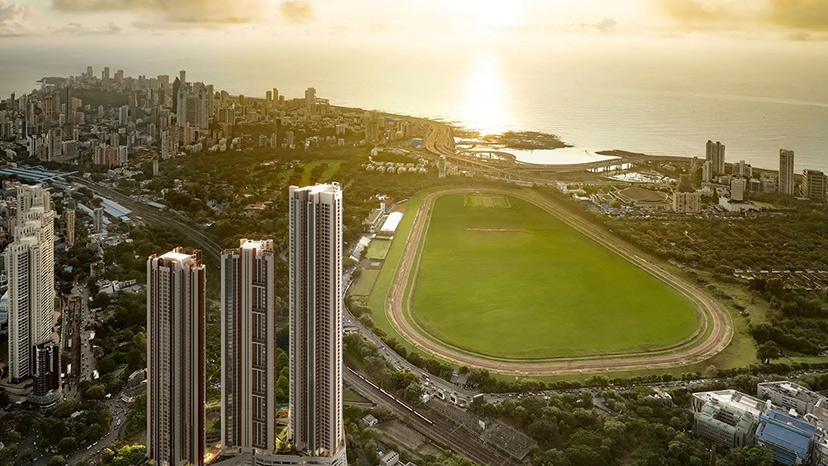
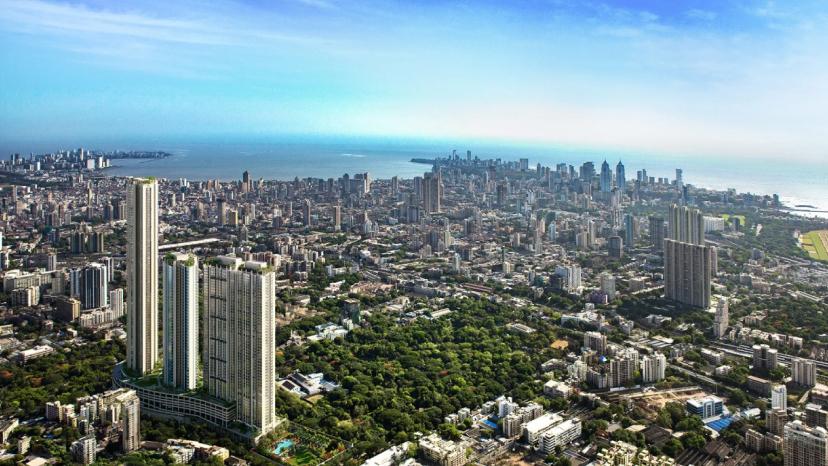
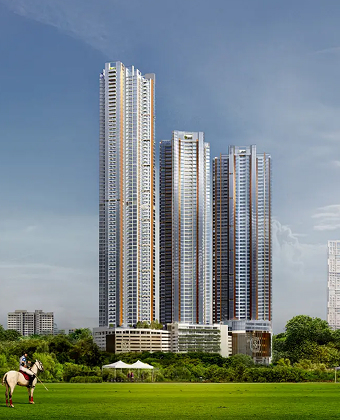
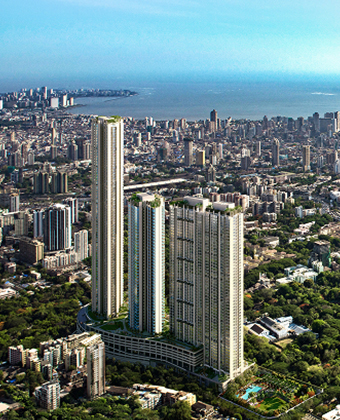
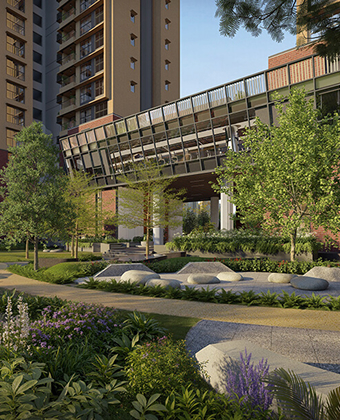
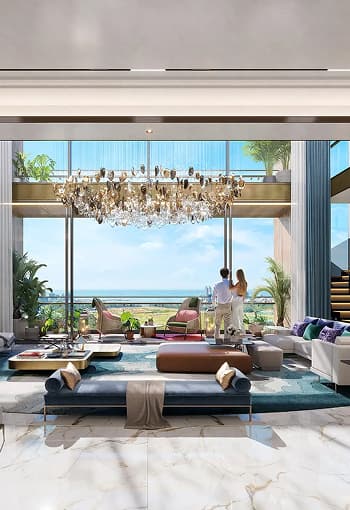
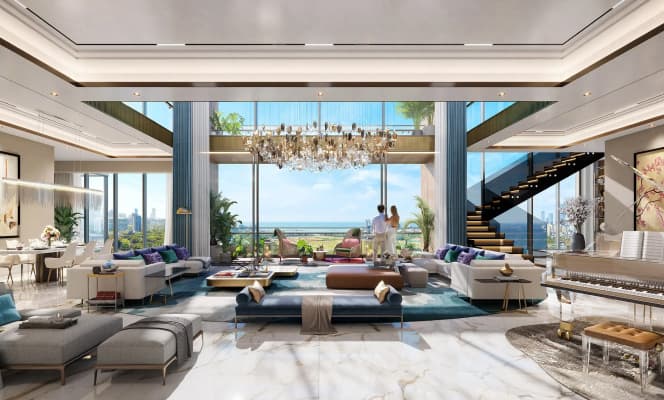
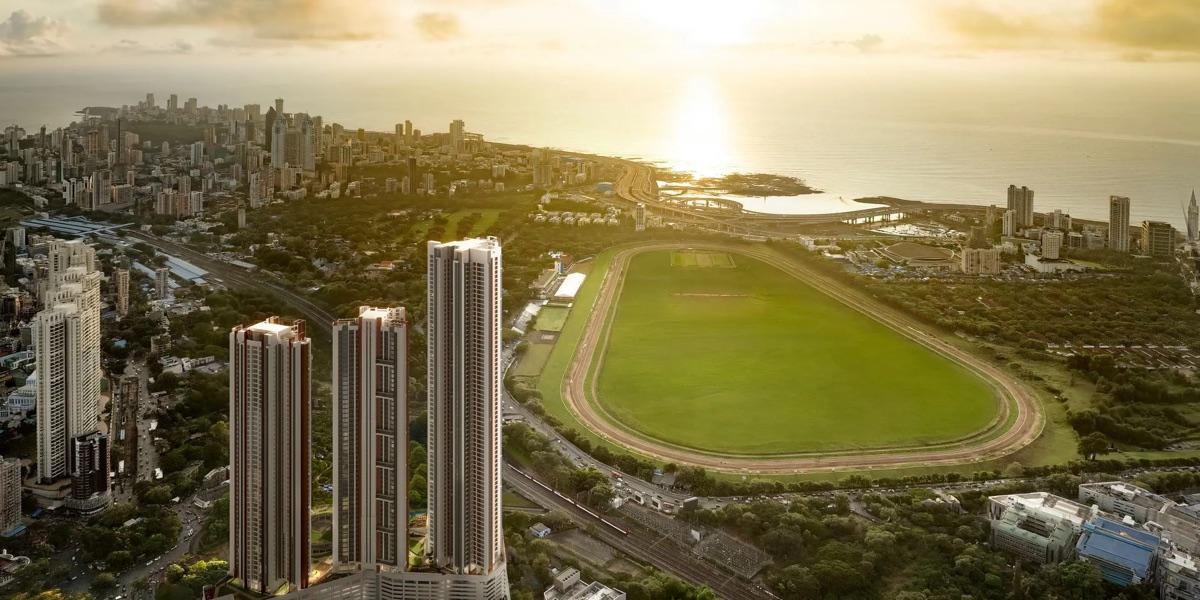
Piramal Mahalaxmi at Jacob Circle, Mahalaxmi, features 2, 3, 4, and 4.5 BHK residences across three towers of 49 to 66 stories. They offer direct views of the Mahalaxmi Racecourse and the Arabian Sea. The South and Central towers have received Occupancy Certificates and are ready for move-in, ensuring verified quality before commitment. MahaRERA registrations: P51900015854 (South), P51900016482 (Central), P51900021057 (North).
Piramal Aranya in Byculla offers 2 to 5 BHK residences across four towers facing the 60-acre Rani Baug botanical gardens and the Eastern Harbour. Avyan (P51900003324) and Arav (P51900018039) are completed with OC; Ahan I (P51900020330) has received its Occupancy Certificate and is nearing possession, while Ahan II (P51900051735) is topped out and under construction, offering entry pricing for a South Mumbai address before possession.
Mulund West: Premium with a Mumbai Address
Mulund West is the last major residential suburb on the Mumbai side of the Central Line. This gives it an advantage in BMC addresses that Thane lacks. Its closeness to Sanjay Gandhi National Park, a protected green area of 104 km² that cannot be developed, provides a lasting view advantage. Metro Line 4 (currently under construction, expected in 2026) will serve Mulund directly, improving access to BKC and the eastern corridor.
Piramal Revanta on LBS Marg, Mulund West, spans 12 acres with over 50% open space. It borders SGNP directly and offers up to 5 BHK + Study residences across six towers, including Club Rasa and Club Raha as resident clubhouses. Towers 1–4 have received Occupancy Certificates. MahaRERA registrations: P51800005983, P51800014021, P51800018099, P51800031310.
Balkum, Thane West: Township Scale with Infrastructure Momentum
For buyers seeking a strong mix of space, promising infrastructure, and long-term value, Balkum, Thane West, is an ideal choice within Piramal Realty's portfolio. Metro Line 4 is currently under construction, with partial operations between Gaimukh and Cadbury Junction targeted for later in 2026; the full Wadala–Kasarvadavali corridor is expected to connect to BKC once complete. Metro Line 5 Phase 1 is over 95% complete and will soon provide Thane West with access to both metro lines. The Thane–Borivali Twin Tunnel, expected to be completed by the end of 2028, will add a fast 15–20-minute route to the western suburbs.
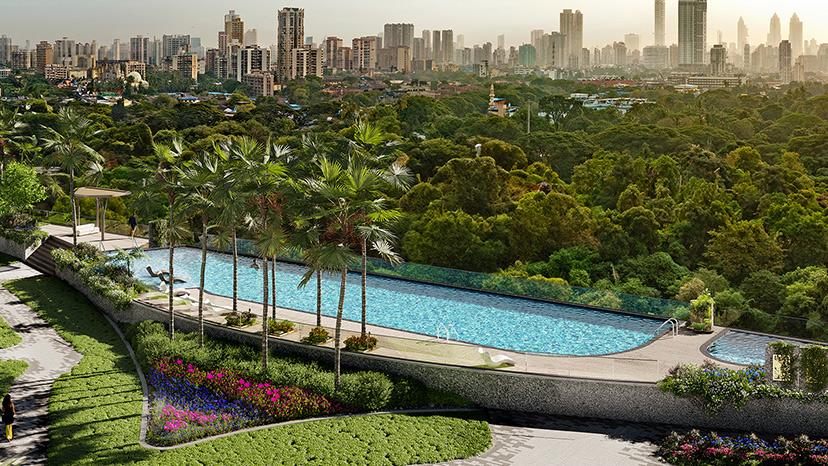
Piramal Vaikunth in Balkum is a 32-acre integrated township with up to 40% open space, a 47,000 sq. ft clubhouse, an on-site ISKCON Temple, and views of Thane Creek and the Yeoor Hills. Clusters 1, 2, 4, and 4A have been delivered to its residents. Cluster 3 (1 BHK, 1 BHK + Study, and 2 BHK) has received its Occupancy Certificates. A proposed Kapurbawdi Metro station (interchange for Lines 4 and 5) is just 0.5 km away from the project.
Rental Yield Realities in Mumbai
Mumbai is mainly an appreciation-driven market, not a high-yield rental market. Gross rental yields in the city range from 2% to 4%. There is significant variation by locality: South Mumbai and Malabar Hill typically yield 2% to 3%. Established western suburbs like Bandra and Andheri yield 3% to 5%. Outer areas like Thane and Navi Mumbai yield 3% to 4%. Buying residential property in Mumbai solely for rental income requires careful calculations against acquisition costs, stamp duty, registration, and ongoing maintenance.
For those focusing on rental income, the best configurations tend to be well-connected mid-suburb 2 BHKs that are close to the metro. This is preferable to high-end large units, where the acquisition cost is often too high compared to the achievable rent.
How to Choose the Right Locality for Property Investment in Mumbai
The best way to evaluate where to invest in Mumbai real estate includes these steps:
- Verify the RERA registration at maharera.mahaonline.gov.in before making any payment. Check the promoter's name, the possession date, and ensure the Commencement Certificate is uploaded.
- Confirm infrastructure delivery timelines. Differentiate between confirmed and under-construction projects, like the upcoming Metro Line 4 and the operational Coastal Road, and longer-term projects with estimated timelines.
- Calculate the total acquisition cost: Unit price + GST (5% on under-construction) + stamp duty (6% for male buyers, 5% for female buyers in Maharashtra) + registration (1%, capped at ₹30,000) + maintenance fund.
- Visit a delivered phase by the same developer before committing to an under-construction project. A developer who has completed phases provides buyers with a reliable reference for quality.
- Match the locality to your investment timeline. South Mumbai is a long-term, capital-preserving area. Emerging corridors with confirmed infrastructure have better short-term appreciation potential but require patience.
Frequently Asked Questions
Is Mumbai property a good investment in 2026?➕Mumbai's residential market saw 19,775 new launches in Q1 2026, with a 32% year-on-year increase in capital values (Cushman & Wakefield). Factors such as limited land supply, job density, and infrastructure projects support continued growth for buyers who plan to hold investments for the medium- to long-term. Mumbai favours patient buyers instead of those looking for quick profits. Real estate investment here is best suited to those with steady income, manageable EMIs, and a holding period of 5 to 10 years.
Which Mumbai localities have the best infrastructure development in 2026?➕The localities with the most active infrastructure projects in 2026 include Mahalaxmi and South Mumbai, where the Coastal Road is operational and the Metro Line 3 Colaba–SEEPZ corridor is expanding. Mulund and Thane, with Metro Line 4 and Wadala–Kasarvadavali opening in phases through 2026, are also active. Thane West will gain Metro Line 5 Phase 1, now over 95% complete. Byculla and Wadala benefit from the Eastern Freeway and the Metro Line 4 Wadala corridor. The under-construction projects in all of these areas have verified infrastructure timelines.
Where should NRIs invest in Mumbai property in 2026?➕NRIs have become significant buyers in Mumbai's luxury market, accounting for about 24% of luxury buyers in the city, including international hubs. For NRI investors, essential considerations include the developer's track record (which can be verified remotely by checking delivered phases or OC status on MahaRERA), RERA registration (which legally protects buyers under Section 18 for delays), and property liquidity (how quickly it can be sold or rented if necessary). South Mumbai and established mid-suburban areas tend to attract the most resale buyers. FEMA governs NRI property investment in Mumbai, so it's wise to consult a property lawyer or CA regarding repatriation and tax implications before buying.
Which Mumbai localities offer the best rental yield in 2026?➕In 2026, gross residential rental yields across Mumbai averaged 2–4%. Higher-yield markets include well-connected mid-suburbs like Andheri, Ghatkopar, and Mulund with yields of 3 to 5%, as well as outer corridors like Thane and Navi Mumbai, yielding 3 to 4%. South Mumbai locations generally yield 2 to 3%, with high acquisition costs compared to rental income, making them better for appreciation than for yield. For pure yield, Thane and Navi Mumbai currently outperform prime areas.
What is the difference between investing in an under-construction vs. ready-to-move property in Mumbai?➕Under-construction properties usually offer lower entry prices and modern features, but they come with the risk of delayed possession. Ready-to-move properties eliminate delivery risk and allow you to inspect the actual quality. They also qualify for immediate home loan disbursement, with no GST on the transaction. When investing in Mumbai real estate, your choice depends on your timeline: if you plan to live there soon, a ready-to-move is less risky. If you are investing with a 3 to 5-year horizon in a RERA-registered project from a developer with a verified OC record, under-construction properties can offer better entry prices.
Disclaimer - This article is based on the information publicly available for general use as well as reference links mentioned herein. The views expressed above are for informational purposes only based on industry reports and related news stories. Piramal Realty does not guarantee the accuracy, completeness, or reliability of the information and shall not be held responsible for any action taken based on the published information. Piramal Realty expressly disclaims/disowns any liability, which may arise due to any decision taken by any person/s basis the article hereof. Readers should obtain separate advice with respect to any particular information provided here in.