What Makes Luxury Real Estate an Attractive Investment for HNIs
The primary reason HNIs invest in luxury real estate extends far beyond the appeal of owning an upscale home; it's the role real estate plays in an advanced wealth portfolio. According to the India Sotheby's International Realty Luxury Residential Outlook Survey 2025, real estate now accounts for 30-35% of HNI investable wealth in India, excluding primary residences. Surveys also show that over half of Indian HNIs have already allocated more than 20% of their portfolios to property. The same survey found that 62% of HNIs plan to invest in luxury residential real estate within the next 12 to 24 months.
Several factors are making this allocation strategy appealing. India has about 13,600 ultra-high-net-worth individuals, who typically allocate around 32% of their portfolios to real estate. This group views premium property not primarily as a lifestyle choice but as a wealth preservation tool. They see it as a tangible asset whose value is not directly linked to stock market fluctuations, provides rental income, and offers security during periods of financial market instability.
Evidence backs up their reasoning. Luxury home prices in India's major cities rose by 8 to 12% in 2025, driven by steady qualified demand and limited supply in premium micro-markets rather than speculative activity. Average luxury housing prices in the top seven cities increased from about ₹14,530 per sq. ft in 2022 to around ₹20,300 per sq. ft by December 2025, indicating real demand over multiple years rather than a sudden spike.
There is also a generational and attitude shift worth noting. Nearly 20% of luxury property buyers in India are now under 40, drawn to curated living environments that offer privacy, wellness options, and global design standards. These buyers are not only purchasing for investment; they are buying for a lifestyle that also serves as an investment — a distinction that increasingly defines the luxury segment.
Which Cities and Locations are HNIs Targeting Right Now?
The landscape of HNI luxury investment in India is more varied than it was ten years ago, although Mumbai, Delhi NCR, Bengaluru, and Hyderabad remain the main markets.
In the Mumbai luxury real estate market, the city accounts for about 32.55% of national premium sales in 2025. The reason for HNI interest is straightforward: a limited coastline and restricted land supply in the centre mean there is little new inventory in the most sought-after locations. This creates ongoing scarcity in areas like Worli, Malabar Hill, and the corridors near BKC. For HNIs seeking trophy assets in areas with real supply constraints, South Mumbai and the western waterfront offer a unique investment opportunity compared to higher-volume markets elsewhere.
Delhi NCR has shown strong growth, with luxury home sales rising 9% in the first half of 2025, and Gurugram leading in high-value transactions. Bengaluru continues to attract wealth from the technology sector and expatriate professionals, with areas like Whitefield and the CBD attracting strong investor interest driven by demand from multinational companies. Hyderabad's Financial District and Kokapet corridor have emerged as stories of strong price appreciation, with the city experiencing the fastest luxury real estate growth rate among India's major metro areas.
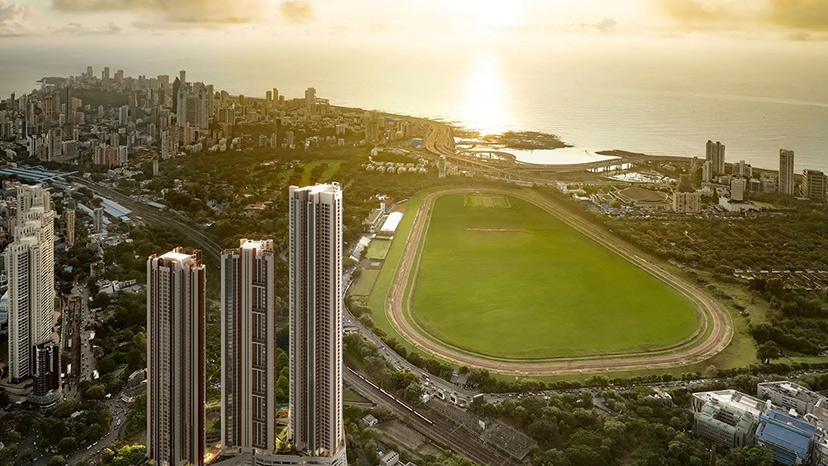
In Mumbai, micro-markets near the sea, overlooking protected green spaces, or located within large, well-planned gated communities, are where HNI concentration and premium pricing hold strongest. Areas like Byculla, home to Piramal Aranya, which faces the 60-acre Rani Baug and Mahalaxmi, where Piramal Mahalaxmi overlooks the 225-acre Mahalaxmi Racecourse, show the premium that protected green views command in an otherwise dense urban setting.
Is the Luxury Real Estate Market Growing Right Now?
According to leading industry estimate, the outlook for India's luxury residential market remains strongly positive, although projections should always be viewed with appropriate caution. Mordor Intelligence's January 2026 report states that the Indian luxury residential real estate market was valued at approximately USD 57.87 billion in 2025 and is expected to reach around USD 107.99 billion by 2031, with a compound annual growth rate of about 11%.
JLL data indicates that homes priced above ₹1 crore accounted for 62% of India's total housing sales in the first half of 2025, signalling a fundamental shift in the premium segment's market share.
The luxury market has also shown some resilience during fluctuations in equity markets, a response that analysts refer to as ‘trophy-asset psychology.’ Mordor Intelligence specifically notes that transaction volumes in Mumbai and Delhi NCR remain strong even during tighter macro conditions, driven by HNIs who view premium property as a stable store of value rather than a speculative asset. However, the same report points out that high-value listings in Mumbai's premium bracket might take up to 4 years to clear during periods of buyer caution, and the market's sensitivity to equity performance can make sentiment volatile in the short term.
In honest terms, the luxury market is growing. Demand has structural rather than purely speculative foundations, and the segment has historically shown greater pricing stability than the mid-market and affordable housing segments during downturns. However, ‘stable’ does not mean ‘risk-free,’ and the premium luxury segment is not immune to macroeconomic shocks, high interest rates, or oversupply in specific areas.
Future Trends in Luxury Residential Properties
Several clear trends are reshaping what HNIs consider ‘luxury property’ in India.
- Sustainability and wellness: Younger HNI buyers are specifically seeking green-certified developments, air-quality monitoring, biophilic design, and integrated wellness facilities. These features are increasingly present in premium developments and are correlated with stronger resale values among this buyer group.
- Branded residences gaining ground: Developments where a developer collaborates with a hotel brand or luxury label to deliver a curated living experience are growing significantly in popularity. Market reports show rising buyer confidence in credibility-backed environments, where the association with a known brand reduces perceived risk and supports a premium at both purchase and resale.
- Low-density living: Post-pandemic, HNI buyers are increasingly seeking developments that emphasise open space, lower unit density, and a community character over the traditional high-rise model. This trend is visible in both Bengaluru's villa neighbourhoods and Mumbai's premium townships, which offer substantial dedicated open space.
- Smart home and technology as a baseline: Advanced security systems, air-quality monitoring, and energy-management infrastructure have moved from premium differentiators to standard expectations in the luxury segment. Buyers now evaluate these features as part of the purchase decision rather than treating them as optional add-ons.
Should NRIs Consider Luxury Real Estate Investment in India?
NRIs and Overseas Citizens of India (OCIs) can legally buy residential and commercial property in India without prior approval from the Reserve Bank of India, according to the Foreign Exchange Management Act (FEMA), 1999. There is no limit on how many properties they can own. The legal framework is straightforward. More and more NRIs are exercising this right. CBRE-Assocham data from the first half of 2025 shows that increasing NRI demand has helped keep India's premium property market on an upward path. Overseas Indian buyers are investing in tangible domestic assets to safeguard their wealth amid global uncertainty.
All payments for property purchases by NRIs must flow through authorised Indian banking channels. The three account types are:
| Account Type | Purpose | Repatriation Limit | Best For |
|---|
| NRE (Non-Resident External) | Holds foreign earnings converted to INR | Full repatriation of principal and interest permitted | NRIs wanting to move funds back overseas freely |
| NRO (Non-Resident Ordinary) | Holds income earned in India (rent, dividends, salary) | Up to USD 1 million per financial year (after applicable taxes) | NRIs with Indian income sources, such as rental income from property |
| FCNR (Foreign Currency Non-Resident) | Fixed deposit in foreign currency; protects against rupee depreciation | Full repatriation of principal and interest permitted | NRIs who want to avoid currency risk and keep savings in a foreign currency |
Cash payments are not allowed under FEMA and may result in penalties of up to three times the purchase price. NRIs who cannot be present for transactions can use a Power of Attorney, which must be notarised and attested at the Indian Embassy or Consulate in their country.
NRIs cannot purchase agricultural land, plantation property, or farmhouses, but they can inherit or receive these as gifts from a resident Indian. From a tax perspective, rental income from Indian property is taxable in India, and capital gains tax applies upon sale. NRIs in countries that have a Double Taxation Avoidance Agreement (DTAA) with India, including the US, UK, UAE, Canada, Australia, and Singapore, may qualify for treaty benefits. The Union Budget 2024 lowered the Long-Term Capital Gains (LTCG) rate on property from 20% (with indexation) to 12.5% (without indexation). NRIs should consult a qualified advisor to review the current tax rules.
Currency conditions also matter — when the rupee weakens against major currencies, Indian property becomes cheaper for overseas buyers. This trend has historically increased NRI interest during times of rupee depreciation.
Gated Communities vs Independent Houses: What Should You Invest In?

For high-net-worth individuals (HNIs) considering gated community apartments or townhomes rather than independent houses, the decision hinges on their primary motivations.
Independent houses offer maximum control and customisation. The owner is responsible for construction, design, expansion, and maintenance. They suit buyers who want to create a specific living environment tailored to their preferences, prefer not to share common areas or pay maintenance charges, or see long-term land appreciation as their primary investment goal in markets where land value is significant.
Gated communities, especially large, integrated townships developed by established, RERA-registered builders, offer distinct yet well-documented advantages for HNI investors. Security, facility management, and shared amenities are managed to a consistent standard. This often results in more predictable property maintenance and a more professional approach to upkeep compared to independent houses. This is important for resale and rental potential; a buyer or tenant looking at a premium flat in a gated community ten years later will find a well-maintained building with documented management, a rarity for older independent homes. Piramal Vaikunth, a 32-acre integrated township in Balkum, Thane West, is one example of how professionally managed communities compound in appeal over years.
Data on HNI purchases provides insight. Apartments and condominiums in gated developments made up about 62.35% of India's luxury residential market share in 2025. While villas and landed properties are growing faster, with a 11.2% projected CAGR, they still represent a smaller share of transactions. This preference showcases that in major Indian cities, land scarcity, security, and professional amenity management make gated communities more practical as both lifestyle and investment options for most HNI buyers.
For those looking at Mumbai's luxury market, there's an additional factor: the most sought-after areas in South Mumbai and the western waterfront are too densely built to allow new independent houses. Therefore, premium apartments in established gated communities or landmark buildings are the only viable investment options in those prime South Mumbai locations.
Frequently Asked Questions
Which locations are best for real estate investment right now?➕Mumbai, Delhi NCR, Bengaluru, and Hyderabad are the main cities where HNI and NRI luxury investment is concentrated. In Mumbai, micro-markets with permanent green or ocean views and limited land supply, such as Worli, Malabar Hill, Byculla, and Mahalaxmi, see the strongest pricing. Bengaluru and Hyderabad show strong growth linked to their tech sector ecosystems.
Is now a good time to invest in luxury real estate?➕Market data points to genuine structural demand instead of speculation. Average luxury prices across India's top cities rose from about ₹14,530 to ₹20,300 per sq. ft between 2022 and December 2025. However, the right timing depends on personal financial goals, holding periods, and specific market conditions. This information is based on market data, not investment advice; consult a financial advisor before making any decisions.
What is the trend in luxury real estate in India?➕Key trends include a growing preference for wellness-integrated, sustainability-certified developments, increased demand for branded residences with hotel management, a shift toward low-density living with significant open spaces, and greater participation from NRIs and younger HNIs. The luxury sector now accounts for 62% of total residential sales above ₹1 crore in the first half of 2025.
Is the luxury sector recession-proof?➕It is more resilient than the mid-market and affordable segments during downturns, partly because HNI buyers usually rely less on loans. Additionally, premium properties in limited-supply areas tend to hold their value better during economic downturns than in higher-volume markets. However, it is not completely immune to macroeconomic shocks. Research from Mordor Intelligence indicates that Mumbai's premium inventory absorption is sensitive to stock market performance, which can extend clearance timelines during times of financial uncertainty.
What are some future trends in residential real estate in Indian cities?➕Sustainability and green certifications, wellness infrastructure, smart home technologies, and biophilic designs are becoming standard expectations for HNIs rather than just luxury differentiators. Branded residences are gaining popularity as a mark of credibility. Low-density and integrated townships are outperforming high-density vertical developments in lifestyle appeal among premium buyers.
Is it a good idea for NRIs to buy property in India?➕NRIs are active participants in India's luxury real estate market, driven by currency advantages, the desire to diversify their assets, emotional ties to India, and the perceived stability of Indian real estate during global uncertainty. Whether it is a good fit for a specific NRI depends on their financial profile, timeline, and tax situations in both countries. It is crucial to consult a qualified advisor who understands both FEMA regulations and the tax laws of the NRI's country of residence.
Is it possible for NRIs to buy property in India?➕Yes. Under FEMA 1999, NRIs and OCIs can purchase any number of residential and commercial properties in India without prior RBI approval. However, they cannot buy agricultural land, plantation property, or farmhouses. All payments must be made through authorised banking channels (NRE, NRO, or FCNR accounts). Cash payments violate FEMA regulations and may result in penalties of up to 3 times the transaction value.
What is the real advantage of living in a gated community versus an independent house?➕Gated communities provide professional security, centrally managed facilities, and consistent maintenance standards that support resale and rental appeal over time. Independent houses offer greater customisation and complete owner control. In major Indian cities, land scarcity makes prime independent houses impractical or unavailable for most buyers. Hence, premium gated community developments dominate as the preferred choice for HNI investment.
Disclaimer - This article is based on the information publicly available for general use as well as reference links mentioned herein. The views expressed above are for informational purposes only based on industry reports and related news stories. Piramal Realty does not guarantee the accuracy, completeness, or reliability of the information and shall not be held responsible for any action taken based on the published information. Piramal Realty expressly disclaims/disowns any liability, which may arise due to any decision taken by any person/s basis the article hereof. Readers should obtain separate advice with respect to any particular information provided here in.