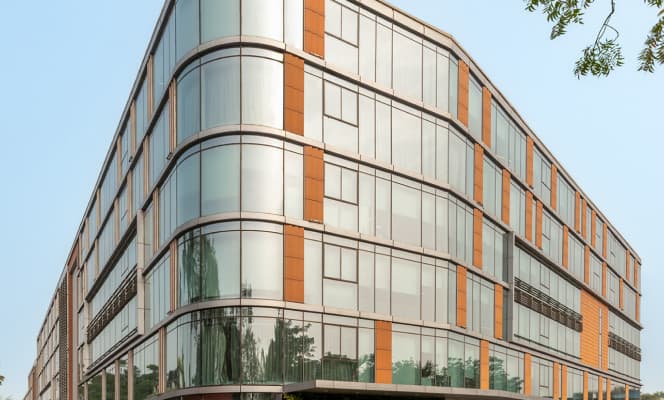
Why Open Space Has Become a Priority for Homebuyers
Research increasingly supports what many Mumbai residents expereince everyday. A study by Poddar, Banavaram, Ramanaik et al., published in BMC Public Health (Vol. 25, 1597, 2025; DOI: 10.1186/s12889-025-22817-x), looked at urban stressors among adults in an Indian megacity. It found that residents consistently cited housing density, crowding, traffic, and noise as major factors affecting their mental well-being. One participant shared how the commercialisation and crowding in their area forced them to move in search of a better living situation.
Another study of inner-city residents in India by Evans, Lepore, Shejwal, and Palsane, published in the Journal of Personality and Social Psychology (1998), revealed that the negative effects of residential crowding on mental health partly stem from a decline in social support systems. In crowded conditions, people report too many unwanted interactions and not enough privacy, leading them to withdraw socially. This withdrawal weakens community ties that support wellbeing.
Together, these findings help explain a noticeable change in buyer behaviour across Mumbai. There is a growing preference for residential projects that provide real open space and lower density. Buyers are willing to pay more, as they increasingly view space and quiet as essential for their daily wellbeing, rather than optional extras.
What Does ‘Living Well’ in a Dense Urban Environment Mean?
Living well in a city like Mumbai is not about escaping urban life It is about creating a meaningful buffer between the city’s intensity and the comfort of everyday life at home. A 2025 review examining architecture and mental well-being in densely populated Indian cities found that built environments which balance essential urban infrastructure with restorative spaces play a vital role in supporting resilience and quality of life. It recommended design approaches centred on accessibility, sustainability, and people.
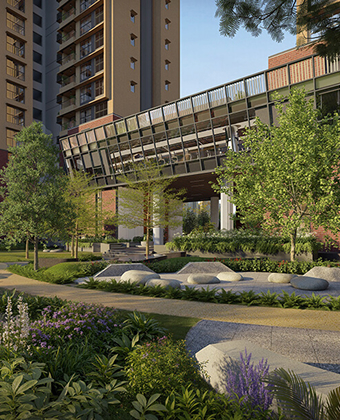
In practice, this means a home that provides a clear transition: a building entrance, a landscaped podium, a clubhouse or garden, and some layer separating the street’s noise from the apartment door. The lack of this buffer is a common, though often overlooked, frustration in dense city living. Residents step directly from chaos into a flat with no space to decompress.
Where Can Residents Still Find a Sense of Calm?
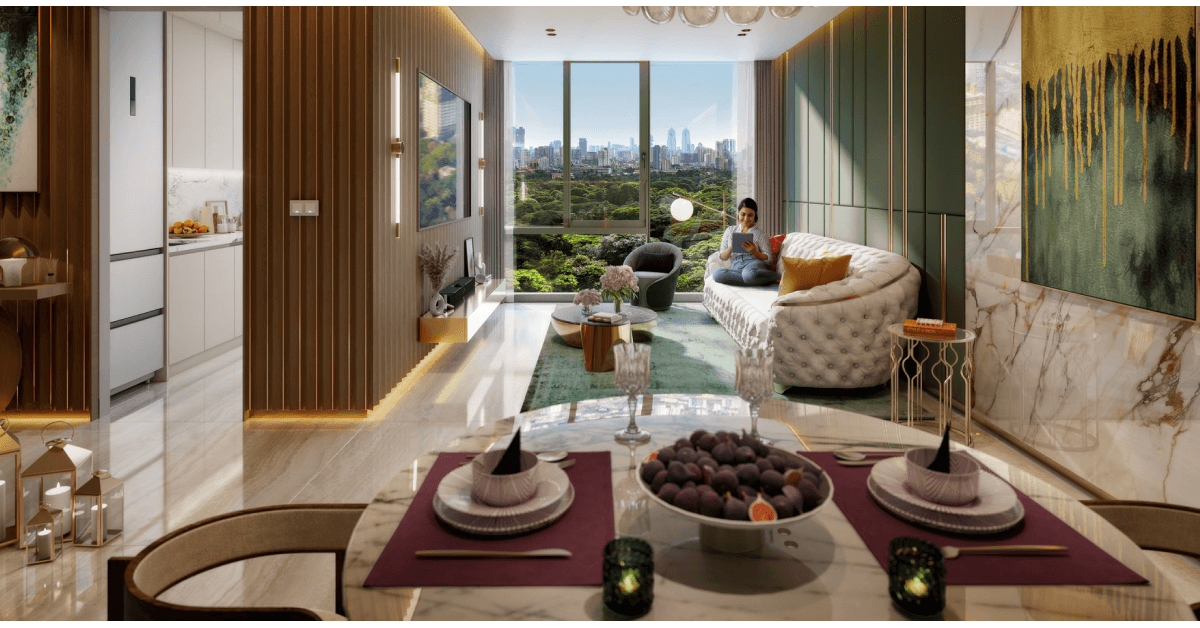
Certain areas in central Mumbai have retained a stronger connection to open space, often due to their proximity to significant natural landmarks or because they were designed with a lower density planning approach. In these locations, access to greenery, wider setbacks, and more breathing room has been preserved despite the city’s rapid urbanisation, offering residents a rare balance between urban convenience and a more spacious, nature-connected living environment.
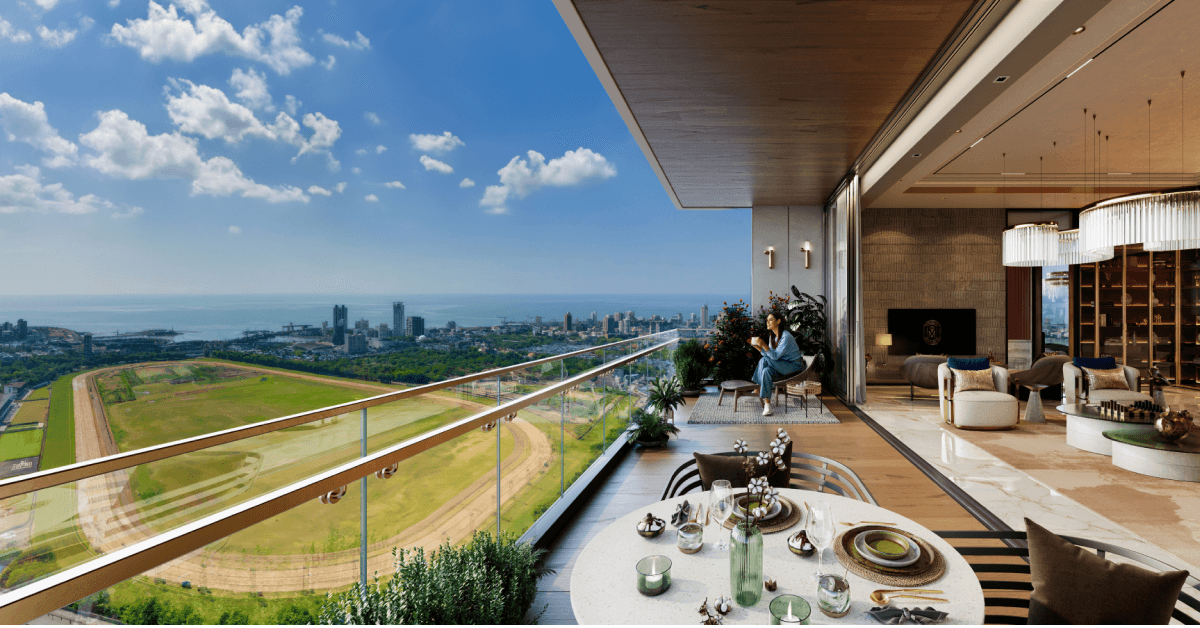
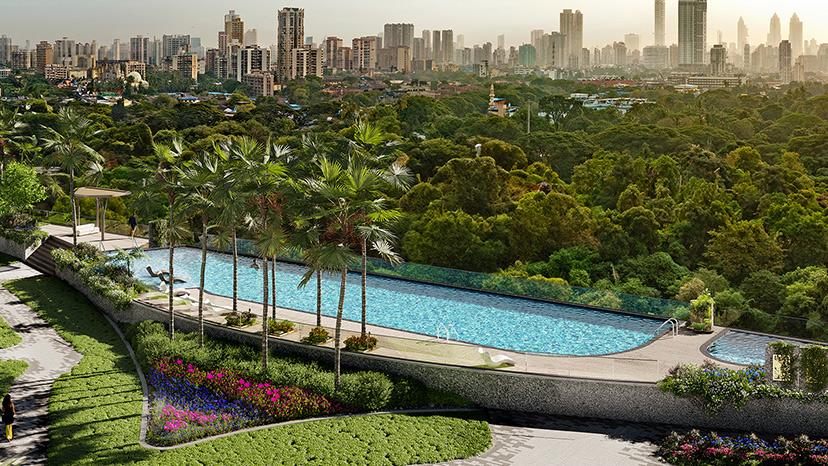
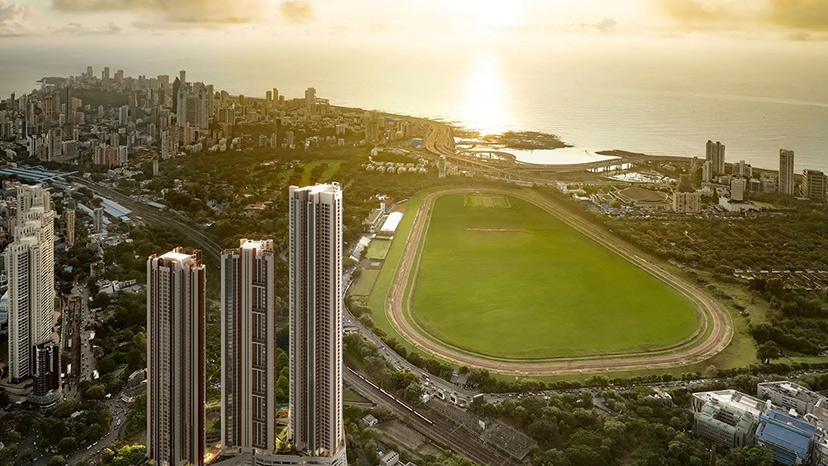
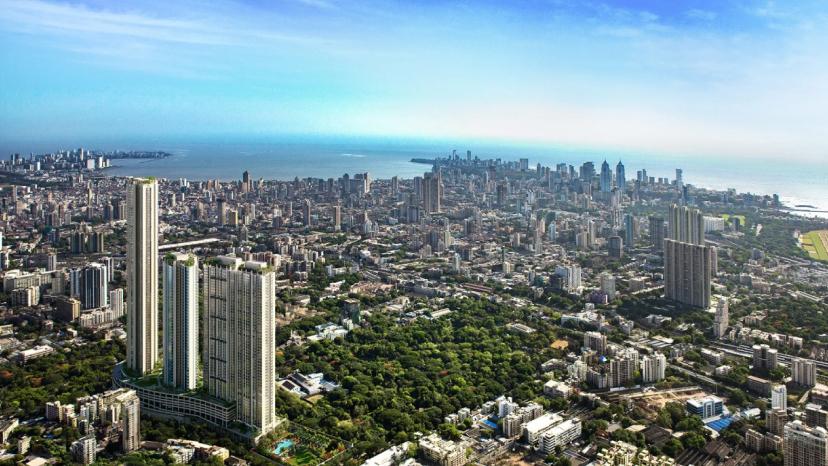
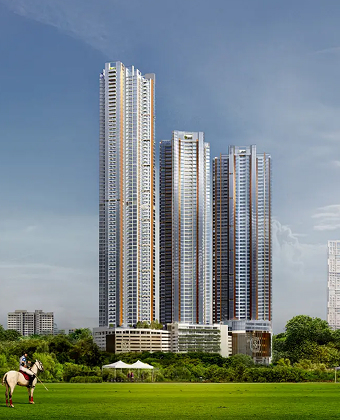
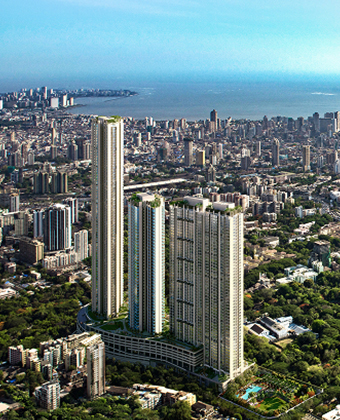
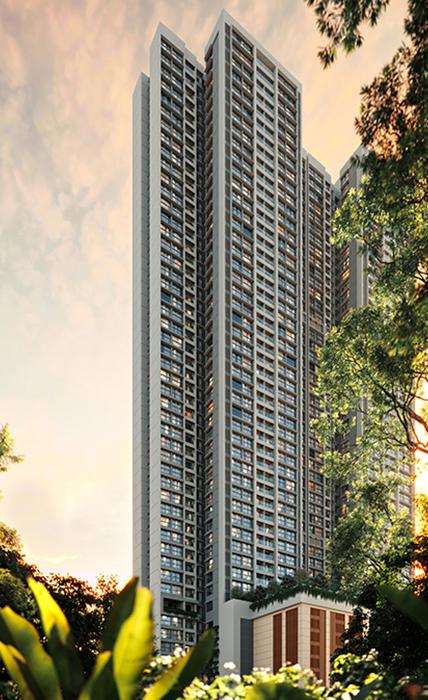
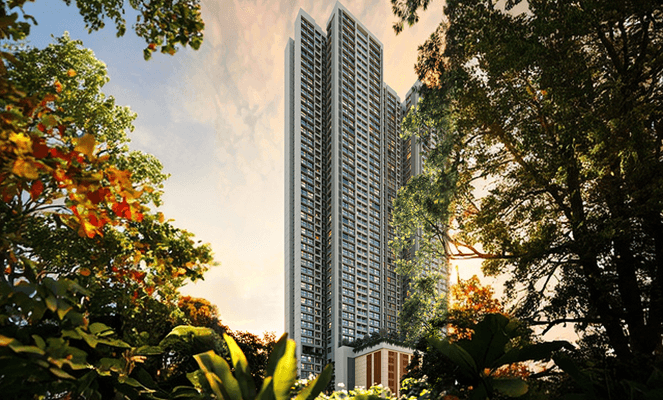
Mahalaxmi, in South Mumbai, offers a rare connection to open space through the 225-acre Mahalaxmi Racecourse, one of the largest protected green expanses in the city centre. This space cannot be used for residential or commercial development; it preserves a substantial open landscape in an otherwise densely built urban area. Piramal Mahalaxmi spans about approximately 4 acres, overlooks both the racecourse and the Arabian Sea, illustrating how thoughtful residential planning can connect residents to a much larger green area than its own property size suggests. With over 36 amenities spread across a landscaped elevated podium designed as an open park, the project provides greenery and recreational space within its walls, regardless of the racecourse view outside.
Byculla offer a similar relationship with open space through it proximity to the 60-acre Rani Baug, Mumbai’s oldest botanical garden and one of the city’s most significant protected green landmarks. Located adjacent to this historic garden, Piramal Aranya, spans approximately 7 acres and provide residents with views and access to a large protected green space that cannot be developed commercially. The project includes over 40 amenities & facilities spread across approximately 2 lakh square feet (approximately 18,580 sq m). These amenities feature carefully designed outdoor areas, such as jogging and cycling paths, cricket pitches, and children’s play areas within the development.
In both cases, the feeling of tranquillity does not come only from inside the building. It partly comes from a permanent public green space that the city cannot redevelop, as well as the project’s landscaped grounds.
How Open Spaces Influence Everyday Life
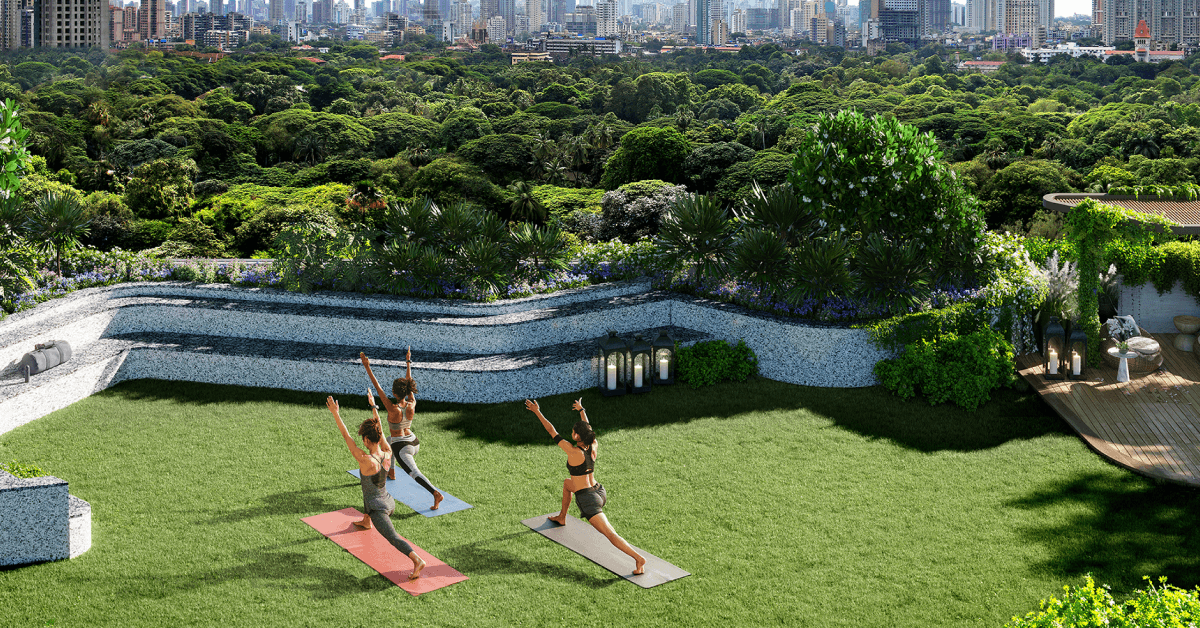
The effects of open green spaces on daily life often manifest in small, cumulative ways rather than in a single major change. A 2022 study published in Social Psychiatry and Psychiatric Epidemiology, which examined the link between urban green space, housing type, and mental health, found that apartment residents’ access to green areas, including tree canopies and open grass, specifically had a measurable impact on mental health outcomes. This suggests that the type and proximity of green space available to apartment dwellers are important, distinct from general access to green space.
In a residential setting, this translates into noticeable, specific patterns: a morning walk that doesn’t involve dealing with traffic to reach a park, a child’s outdoor play without needing to go elsewhere, and a window or balcony view of greenery rather than a neighbouring building’s wall. None of these is a dramatic change, but over a year of daily life, they shape how restorative a home can feel.
Is It Necessary to Compromise Between Convenience and Space?
Most buyers assume they must choose between the convenience of a central address or the space and calm of a quieter location farther away. The truth is that this was more accurate in the past than it is now. The trade-off hasn’t disappeared entirely, but it has become narrower.
Piramal Mahalaxmi and Piramal Aranya both aim to address this trade-off directly. Mahalaxmi is about 10 minutes from Lower Parel and 20 to 30 minutes from BKC via the Bandra-Worli Sea Link. This is a truly central location by Mumbai’s standards. Piramal Aranya in Byculla is a short drive or walk from Byculla Station and has easy access to the Eastern Freeway. It is also right next to Rani Baug’s 60-acre protected garden.
The compromise still exists, but for buyers specifically looking for calm and open space within the city, gated communities and projects near permanent green spaces provide some of the best ways to bridge the gap.
What Homebuyers Should Consider Before Making a Decision
A few practical checks help separate projects that truly provide calm and space from those that only market the idea.
First, differentiate between a view and a guarantee. A view of a racecourse, garden, or park is only as permanent as the protected status of that land. Buyers should confirm whether the adjacent green space is under civic, forest, or heritage protection, which means it cannot legally be developed. It’s important to check that it’s not just an undeveloped private plot that could change in the future.
Second, consider the project’s own open space ratio, rather than just its closeness to external green areas. A project with a high percentage of its own land dedicated to landscaped, open, or recreational space will provide a consistent sense of calm day to day. This is better than relying solely on an external view.
Third, think about density within the building itself. Look at the number of units per floor, the balance of residences to shared amenity space, and whether the project features fewer towers spaced widely apart or many units packed tightly together. This affects not only the view but also the experience of using corridors, lifts, and common areas.
Finally, honestly evaluate the trade-off between commuting and connectivity based on your daily routine. A centrally located home near green space may cost more than a comparable home farther away. The choice should depend on how much daily value that combination of convenience and calm offers against the cost.
Frequently Asked Questions
Is it possible to find open spaces while living in Mumbai?➕Yes, especially in areas close to permanent, protected green landmarks. Mahalaxmi, facing the 225-acre Mahalaxmi Racecourse, and Byculla, near the 60-acre Rani Baug, are examples where central residential projects can provide meaningful green space alongside city-centre convenience.
Which areas in Mumbai offer a quieter residential environment?➕Areas with large, protected green spaces typically provide a quieter residential atmosphere, even in central Mumbai. Mahalaxmi, with its racecourse view, and Byculla, next to Rani Baug, are examples where a project's landscaped grounds combine with a permanent green buffer, creating a calmer environment than typical dense city blocks.
Why are homebuyers looking for homes with more open space?➕Research increasingly shows a connection between residential density and crowding and negative effects on mental well-being, such as reduced privacy, social withdrawal, and increased stress. As this awareness grows, more homebuyers see open space and green surroundings as essential for daily well-being rather than just a nice-to-have.
What makes a low-density residential project different?➕A low-density project devotes a significantly greater portion of its land to open, landscaped, or recreational space than to built area. This usually means fewer units per floor, more space between buildings, and a larger amount of amenity and green space relative to residential area than a typical high-density development.
How does open space affect quality of life?➕Multiple studies support a direct connection. Research on residential crowding among inner-city residents in India found that crowded conditions are linked to social withdrawal and a breakdown of community support networks (Evans, Lepore, Shejwal & Palsane, 1998). A 2022 study in Social Psychiatry and Psychiatric Epidemiology found that apartment residents' access to tree canopies and open grassland had a measurable, distinct impact on mental health outcomes. In practical terms, this means access to outdoor activities, reduced exposure to noise and crowding, and a smoother transition between the street and home; all of these factors contribute to a noticeably different quality of daily life.
Are gated communities a better option in Mumbai?➕Gated communities in Mumbai often offer greater control over density, security, and shared amenities than standalone buildings in dense neighbourhoods. Whether they're the right choice depends on personal priorities, but for buyers focused on calm and open space, a well-planned gated community usually provides more reliable options than an ungated building in a busy area.
Can you enjoy nature without moving far from the city?➕In some areas, yes. Projects next to permanent protected green spaces, like a racecourse or botanical garden within city limits, allow residents to access meaningful green views and surroundings without having to move to the suburbs.
Why are spacious homes becoming more desirable?➕As remote and hybrid work changes the amount of time spent at home, and as research increasingly connects density and crowding to well-being, more buyers are prioritising space both inside their homes and in the surrounding development as an important factor for long-term quality of life rather than just a luxury.
Is township living a good option in Mumbai?➕Township and gated-community living can provide a better balance of open space, amenities, and density than standalone buildings, especially in central areas where land is limited. The best choice depends on the specific project's open-space ratio, amenity planning, and proximity to work and daily needs.
Sources: BMC Public Health (2025), urban stressors and mental health in an Indian megacity; PubMed, residential density and psychological health in India; Social Psychiatry and Psychiatric Epidemiology (2022), urban green space, housing type, and mental health; IJERT (2025), urban anxiety and architectural design
Disclaimer - This article is based on the information publicly available for general use as well as reference links mentioned herein. The views expressed above are for informational purposes only based on industry reports and related news stories. Piramal Realty does not guarantee the accuracy, completeness, or reliability of the information and shall not be held responsible for any action taken based on the published information. Piramal Realty expressly disclaims/disowns any liability, which may arise due to any decision taken by any person/s basis the article hereof. Readers should obtain separate advice with respect to any particular information provided here in.