

Date: 25 September, 2026 Author: Team Piramal Realty
Inside a Township's Upkeep: Who Maintains What, and Who Pays for It
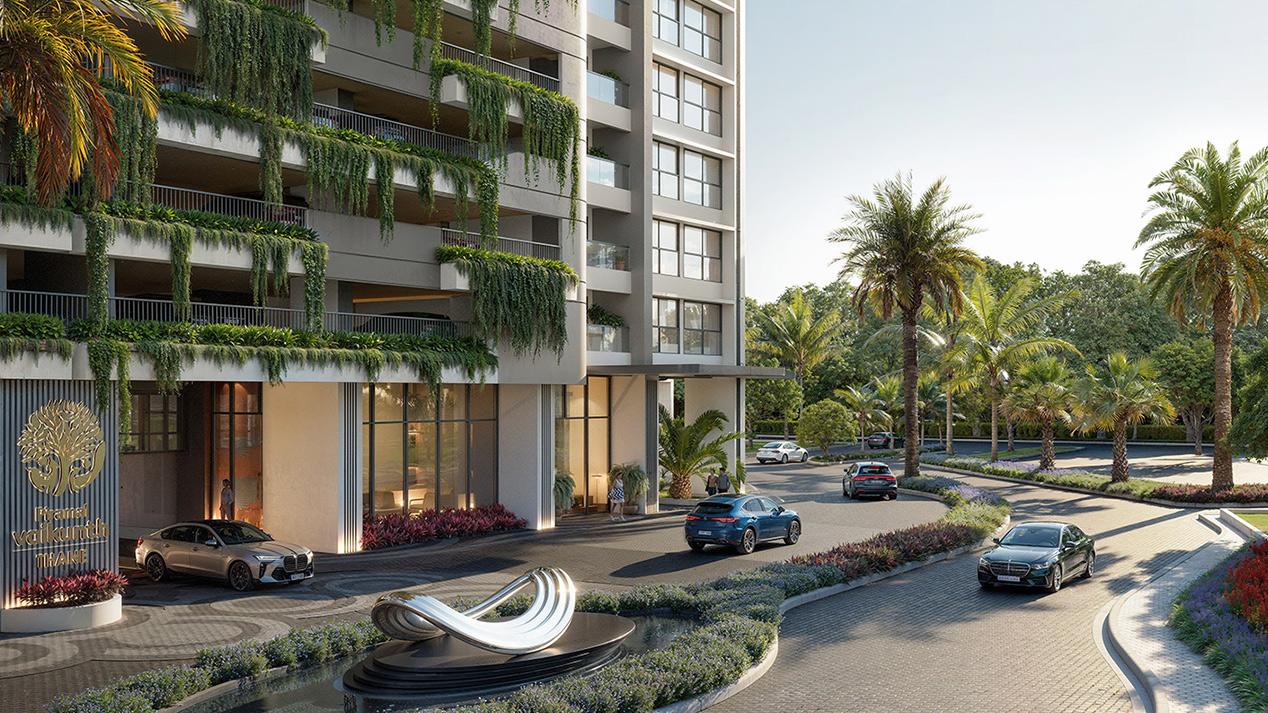
A township runs on more than its residents' goodwill. Someone waters the gardens before the sun gets high, someone checks the lift motor room on a schedule, someone tops up the pool's chlorine and reads the water meter at the gate, and all of that work has to be paid for. That is exactly what common area maintenance charges exist to cover.
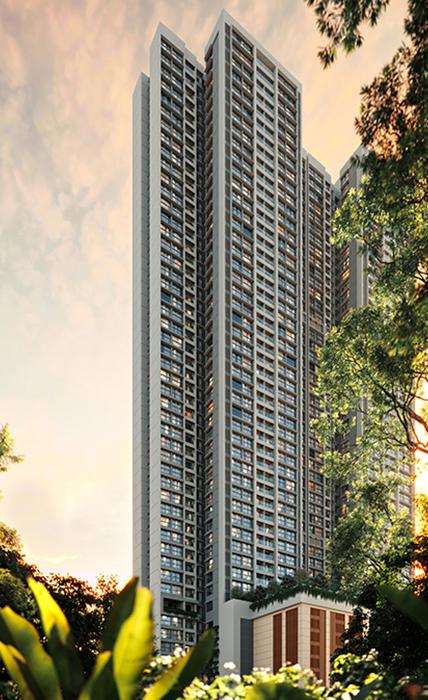
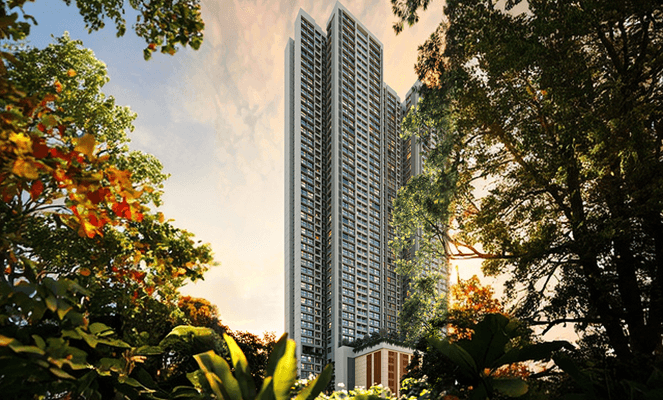
At Piramal Vaikunth in Thane, that upkeep is part of what a resident is actually buying into, not an afterthought billed monthly once the brochure photos stop mattering. In this blog, we examine what CAM charges cover, how a township like this is maintained day to day, who pays, and how those charges are calculated.
What CAM Charges Mean in Real Estate
Common area maintenance (CAM) charges are the recurring fees homeowners pay to upkeep the shared parts of a residential development, the spaces and services no single flat owns but every resident uses. They fund the day-to-day running of everything outside a home's own four walls, billed separately from the cost of the home itself.
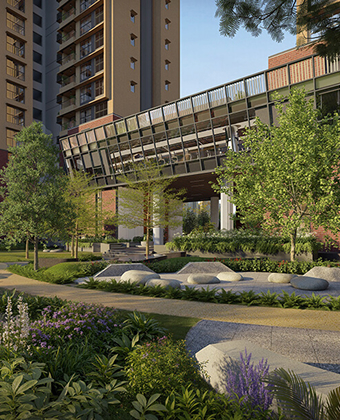
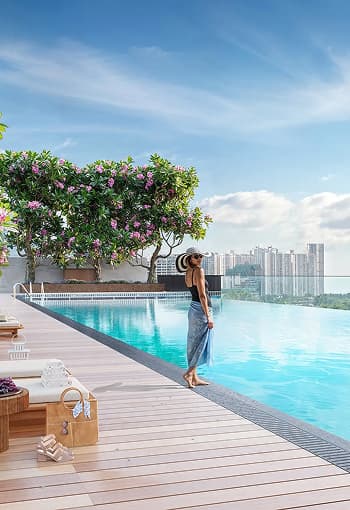
In a typical township, common areas include lobbies and lifts, internal roads and street lighting, gardens and landscaped open spaces, the clubhouse and its amenities, security staff and surveillance, and the water supply and waste-management systems serving the whole development. That's the meaning of CAM charges in one line: residents fund the upkeep of what they share, not what they privately own. Anything inside a resident's own apartment, interior repairs, in-home fittings, private balconies, stays the owner's expense, charged or not.
How Maintenance Is Handled in a Township
In a township, maintenance usually runs at two levels: township-wide upkeep across shared roads, gardens, and central amenities, and building- or cluster-level upkeep specific to each residential block, coordinated by a dedicated facility management team rather than left to residents to organise among themselves.
That team's day runs through housekeeping and landscaping, security staffing and surveillance, lift servicing, water treatment, and waste collection and disposal — the unglamorous, continuous work that keeps a large development running without a resident ever having to think about it.
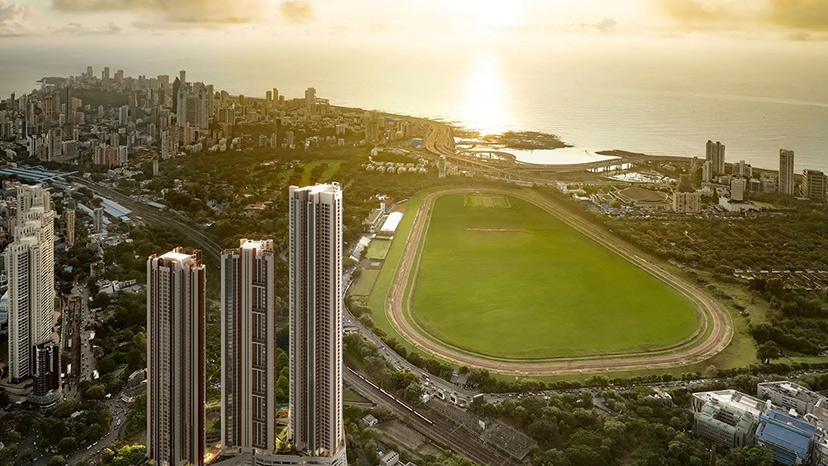
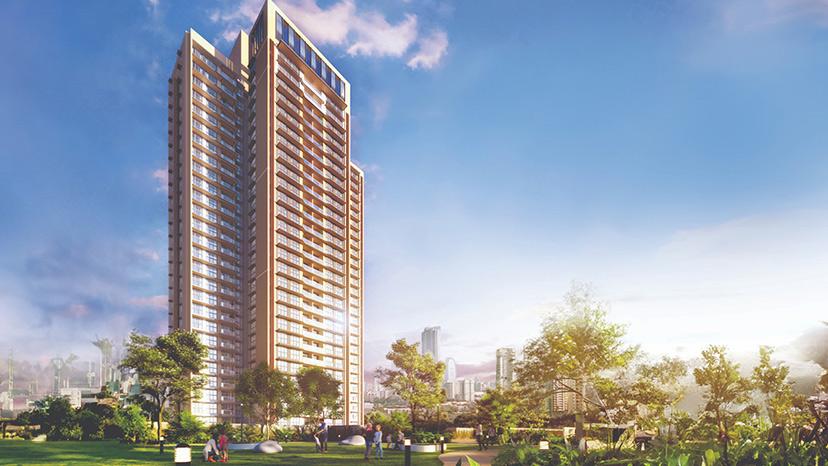
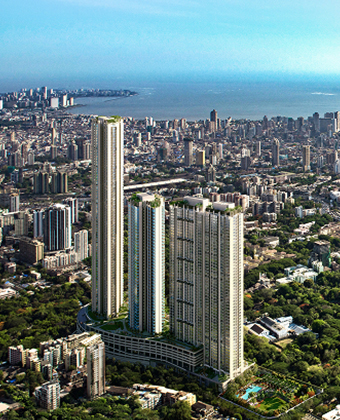
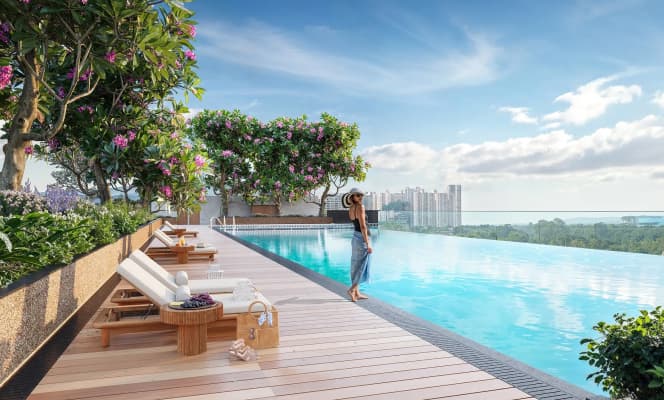
At Piramal Vaikunth, that includes a sewage treatment plant that reuses treated water for landscaping and flushing, rainwater harvesting, solar lighting across the common landscaped areas, and a dedicated environment management team overseeing operations across a development spread over roughly 32 acres.
Who is Responsible for Paying CAM Charges?
CAM charges are the homeowner's responsibility, not the developer's, because they fund the upkeep of spaces the owner has as much of a stake in as any other resident.
In the early phase of a project, before a cooperative housing society or township-level federation has been formed, the developer maintains the common areas and collects the charges directly from owners. Once the society or federation is formed, maintenance responsibility is formally handed over to it, a transition MahaRERA requires developers to support rather than delay. From that point, the society or federation takes over billing and upkeep on residents' behalf.
Where a flat is rented out, CAM charges still belong to the owner by default; a tenant pays them only if the rental agreement explicitly says so.
How CAM Charges are Calculated in a Township
CAM charges are shared in proportion to each home's area, usually its carpet area, so a larger home carries a proportionally larger share of the township's total upkeep cost.
The charge includes a few components: routine upkeep of common areas and services, a sinking fund for major future repairs, a repair fund for nearer-term fixes, and utility costs for running shared spaces like lighting, water treatment, and security. In a township with both township-wide and cluster-level maintenance, a resident's total charge typically combines a share of the wider township's costs with a share specific to their own building or cluster.
In broad terms, working out a home's share of the CAM charge usually follows this sequence:
- The total maintenance cost for the period is worked out, covering both township-wide and cluster-level expenses.
- That cost is split between the sinking fund, the repair fund, routine upkeep, and shared utilities.
- The total is divided across all homes in proportion to carpet area.
- Township-level and cluster-level shares are added together to arrive at each home's final charge.
Why Buyers Choose a Township in Thane
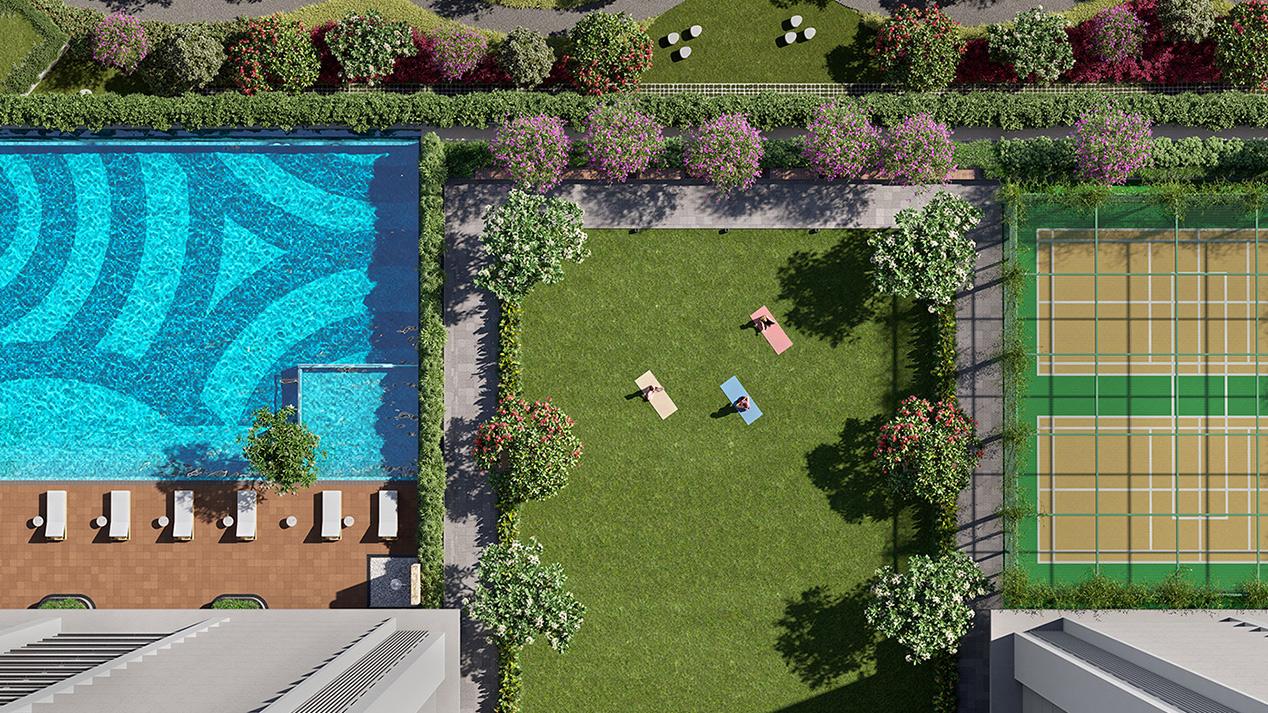
A township brings everyday needs, open space, and shared amenities under one well-kept address, which is why buyers now look for township projects in Thane rather than a standalone building on a single plot.
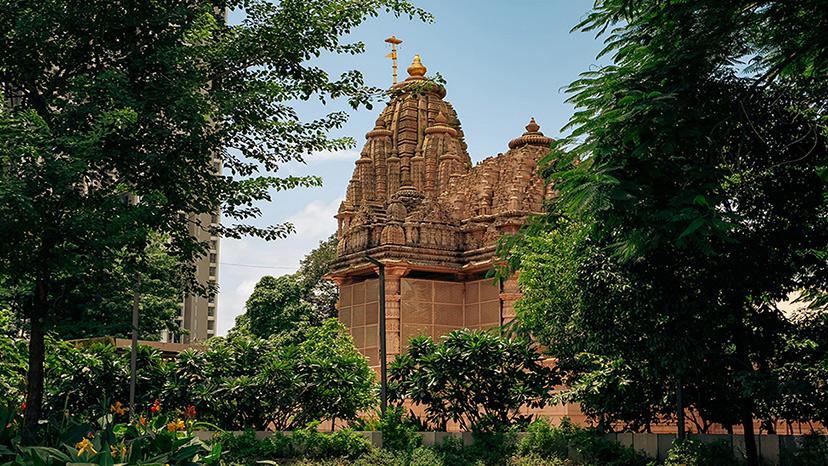
At Piramal Vaikunth, this ecosystem is already visible in everyday life. The township is home to the Sri Sri Radha Govindadeva Mandir, Thane's first ISKCON temple, while Club V, the township's clubhouse, has already been delivered and is operational. Essential social infrastructure is also located nearby, including CP Goenka International School and Currae Speciality Hospital within approximately 1.3 km, Holy Cross Public School around 2 km away, and Jupiter Hospital about 2.8 km from the development. Together, these conveniences contribute to a well-established residential environment where daily needs, community spaces, education, and healthcare remain within easy reach.
For a buyer, that combination — a temple, a working clubhouse, and genuine schools and hospitals, all a short distance from home — is what makes a well-run township in Thane a different proposition from a single building managing its own small patch of common area alone.
Disclaimer - This article is based on the information publicly available for general use as well as reference links mentioned herein. The views expressed above are for informational purposes only based on industry reports and related news stories. Piramal Realty does not guarantee the accuracy, completeness, or reliability of the information and shall not be held responsible for any action taken based on the published information. Piramal Realty expressly disclaims/disowns any liability, which may arise due to any decision taken by any person/s basis the article hereof. Readers should obtain separate advice with respect to any particular information provided here in.