Society Charges Versus Township Common Area Charges
In housing communities, the terms “society maintenance” and “common area maintenance” are often used loosely, but in a large township, they can refer to two different things, sometimes billed separately, sometimes together.
Society maintenance charges typically cover the upkeep of a single building or a small group of buildings managed by one housing society. This includes lifts, water pumps, the building's own security staff, and housekeeping for lobbies and corridors, as well as the building's share of electricity for common lighting.
Township common-area maintenance refers to a broader category that applies when a project includes multiple buildings, clusters, or phases sharing a common area. This covers roads, gates, landscaped gardens, a central clubhouse, sports facilities, and other resources that no single building owns but every resident uses. In a township, a resident may pay a maintenance fee to their own cluster's society and a separate township-level charge that funds the upkeep of the shared campus.
This distinction is important because it explains why two projects with similar per-square-foot maintenance rates can offer very different services. A standalone building's maintenance fee covers only that building, while a township's combined charges cover the building and a share of the township's costs. This is also why township charges tend to be higher.
What Society Maintenance Covers
At the building or cluster level, society maintenance charges usually cover a specific set of ongoing expenses that ensure smooth daily operations. One of the largest recurring costs is elevator maintenance which includes annual service contracts, generator fuel during power outages, and the building's electricity bill for common areas such as lobbies, staircases, corridors, and parking.
Security and housekeeping costs are another major part: salaries for security guards and cleaning staff, as well as often a facilities management vendor who coordinates these services. Water supply costs, including maintenance of overhead tanks and pumps, are usually included in this charge. A portion is often set aside in a sinking fund, a reserve built up over time for major repairs, such as repainting or structural work, that don't occur every year but must be budgeted for in advance.
The requirement to pay maintenance to society is outlined in Section 11(4)(g) of the Real Estate (Regulation and Development) Act, 2016. This section makes the promoter responsible for providing essential services until the residents' welfare association (RWA) takes over. It is also specified in Section 6 of the Maharashtra Ownership of Flats Act, 1963 (MOFA) for projects in Maharashtra. Every buyer must pay these charges as part of the builder-buyer agreement, whether or not the flat is occupied. The obligation to pay is tied to the ownership of the unit and its share of the building's common areas.
What Township Common Area Maintenance Covers
In a township with multiple clusters or towers sharing a campus, a separate or combined charge funds the upkeep of everything outside individual buildings but within the township gates.
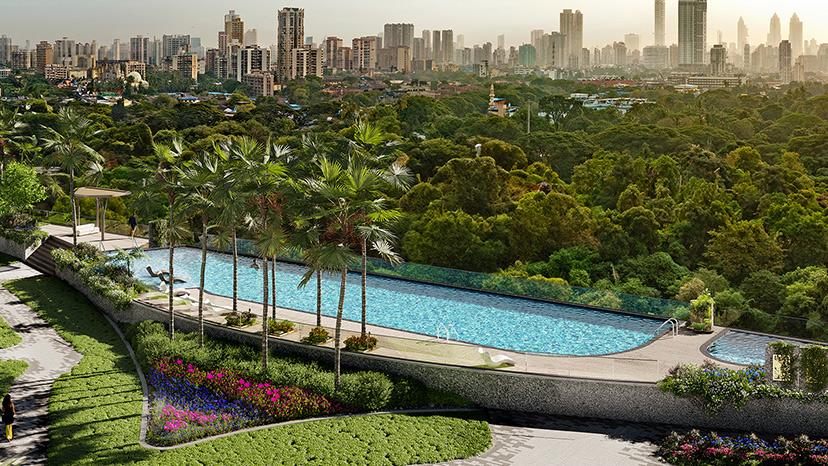
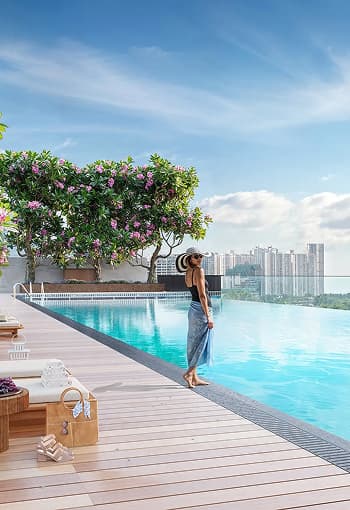
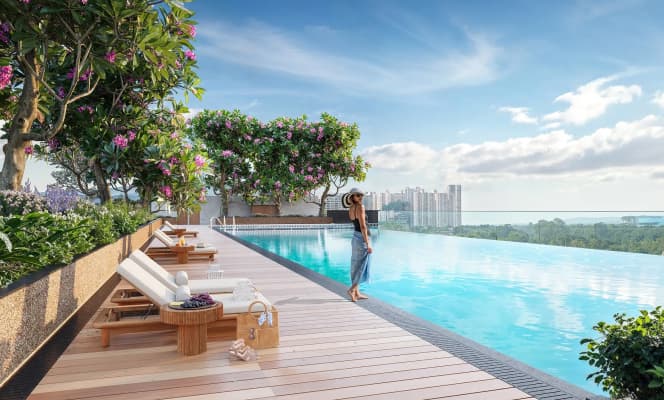
This includes internal roads, street lighting, landscaping across the campus, and the central clubhouse with facilities like swimming pools and gyms. It also covers the township's water supply, sewage treatment, and waste management systems, as well as security and access control for the main gates, separate from each building's entrance security.
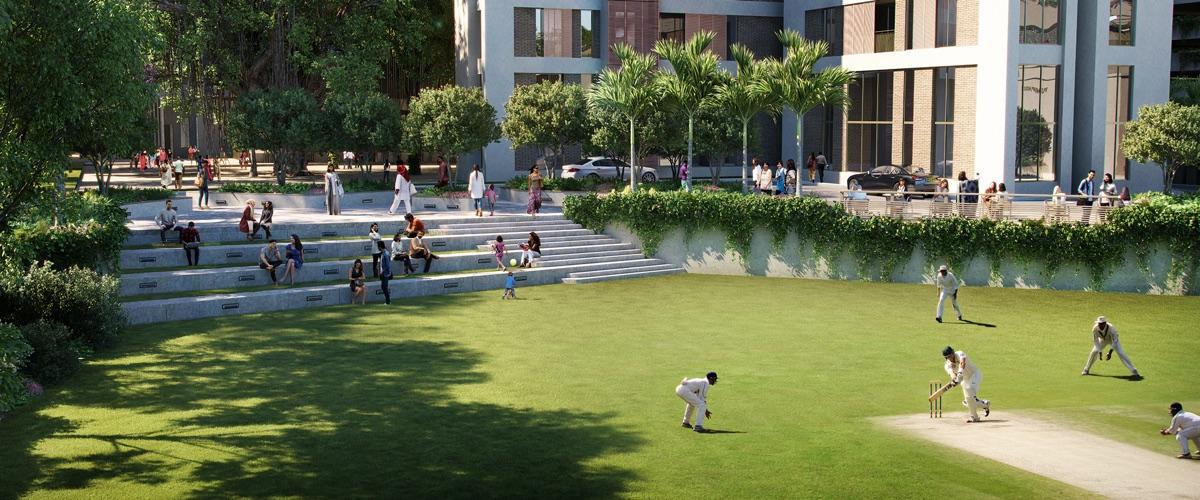
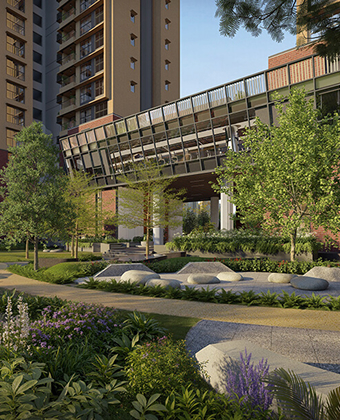
In a township with temples, amphitheatres, jogging tracks, cycling paths, or large landscaped areas, features that are becoming more common in Thane, the upkeep of these shared assets is included in this fee. This charge funds the costs of gardeners, lifeguards for shared pools, horticulture for landscaped areas, and the electricity bill for lighting and common outdoor spaces across many acres.
The key difference from a standalone building is that a resident in a township pays not only for their building's lobby and lift, but also for their share of maintaining a much larger shared environment, often including amenities that no single building could support on its own.
How Are Maintenance Charges Worked Out?
In India, maintenance charges are generally calculated using one of three methods. RERA requires that whichever method is used must be clear and disclosed to buyers before they sign.
The per-square-foot method calculates charges based on the carpet or built-up area of each unit. For example, a 1,000 sq. ft flat at ₹3 per sq. ft pays ₹3,000 per month, while a 1,500 sq. ft flat at the same rate pays ₹4,500 per month. This is the most common method and is usually seen as fair when unit sizes vary significantly, as larger units are expected to use more common infrastructure.
The equal division method splits the total maintenance cost equally among all units, regardless of size. This is reasonable in societies where units are similarly sized, but can feel unfair in a township where a 1 BHK and a 4 BHK pay the same for shared amenities.
The hybrid method combines both approaches: a fixed base charge applies equally to all units, typically covering shared amenities such as the clubhouse and common-area lighting. A variable charge that depends on unit size covers costs that vary with unit size, such as its share of the building's overall maintenance. This method is increasingly common in larger townships, as it separates costs that don't vary by unit size from those that do.
Maintenance rates in India generally range from ₹2 to ₹25 per square foot per month. This wide range depends largely on the scale and type of amenities offered. Societies with minimal facilities are at the lower end, while large townships with extensive amenities are at the higher end. RERA also allows builders to collect maintenance fees for 12 to 24 months in advance upon handing over possession, until the residents' welfare association (RWA) is formed. After that, residents take over collection and management.
What Higher Township Charges Actually Pay For
It's a valid question: why do larger, amenity-rich townships charge more for maintenance than a standalone building nearby? The reality is that the charge directly reflects what is being maintained.
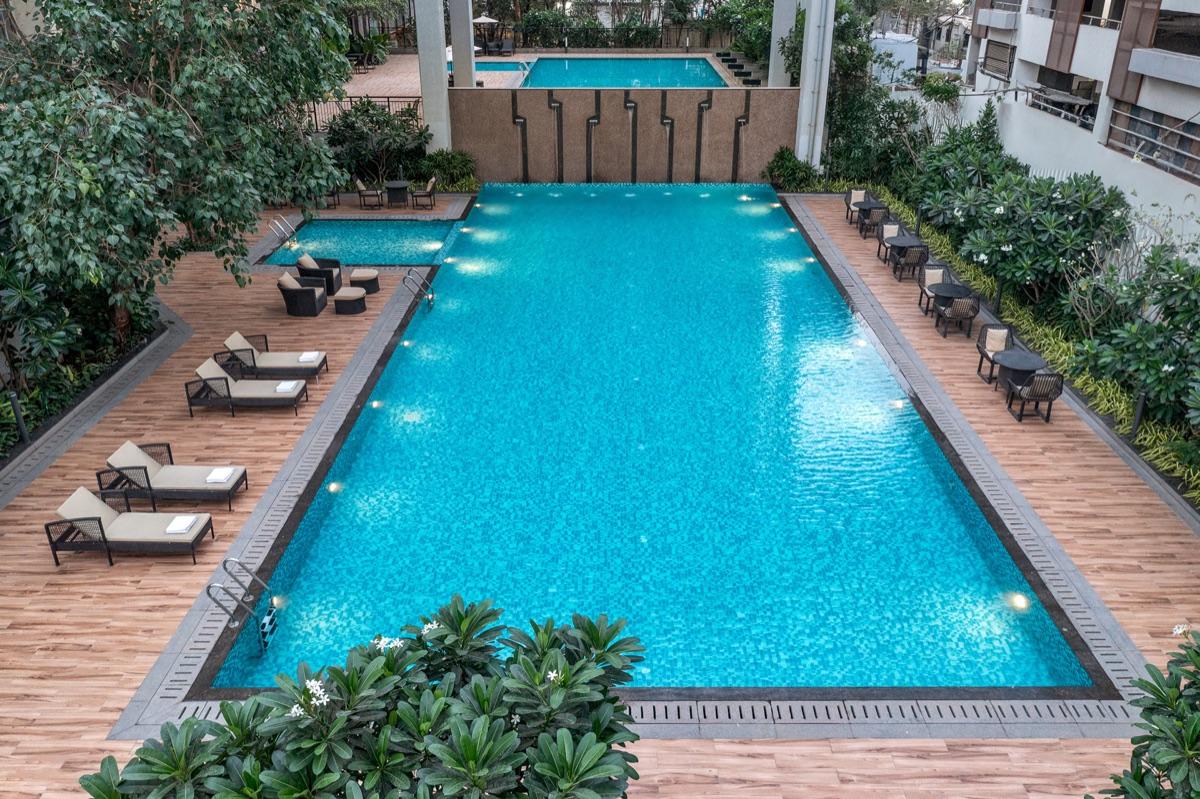
A clubhouse with a swimming pool requires treatment chemicals, lifeguard staffing, filtration system maintenance, and pool cleaning, all costs that don't exist without a pool. A gym requires maintenance contracts for equipment and often supervisory staff. Landscaped gardens across several acres need a team for horticulture, irrigation systems, and seasonal planting. These costs increase as the area of green space grows and are often part of the project's appeal to buyers.
Security and housekeeping expenses grow with the size of the campus. A 30-acre township with multiple gates, roads, and shared buildings needs many more security and cleaning staff than a single building with one entrance. Common utilities management, including sewage treatment plants and waste systems, is more typical in larger townships because the scale makes such systems more practical. However, these systems also incur operating and maintenance costs borne by residents.
In effect, higher township charges cover the ongoing costs of features that set a township apart from a standalone building: more open space, more amenities, more shared infrastructure, and more staff to keep everything running. The charge is not separate from the lifestyle; it supports the lifestyle after possession.
What to Check About Maintenance Before Buying Into a Township
A few specific checks can save a buyer from surprises after possession.
Ask for an itemised breakdown of what the quoted maintenance rate includes. Request a line-item list covering security, housekeeping, utilities, sinking fund contributions, and amenity-specific costs. A lump-sum figure without a breakdown makes it hard to tell if the rate is reasonable for what is offered.
Clarify whether clubhouse and amenity maintenance are included in the main charge or billed separately. In most RERA-registered projects, common-area and amenity maintenance is included in the overall maintenance charge that all residents are required to pay. The use of the clubhouse is generally tied to the project's common areas, which all residents contribute to as part of ownership. Some facilities, such as a separate club membership for guests or specialised services, may incur extra charges; buyers should ask specifically about this distinction.
Inquire whether the quoted rate is a pre-possession estimate or based on an operating township with comparable amenities already active. Pre-possession estimates can sometimes underestimate real operating costs once a clubhouse, pools, and landscaped areas are fully operational and staffed. Requesting maintenance figures from a previous, already-operational phase of the same project, if available, can provide a more accurate picture.
Understand the sinking fund contribution and its structure. This fund covers major repairs that aren't done every year, such as repainting, waterproofing, and structural work. A township with extensive infrastructure will eventually need this fund for repairs related to amenities and buildings. A reasonable sinking fund contribution now reduces the chance of a large one-time special assessment from residents in the future.
Ask how maintenance charges are expected to change as the township is completed in phases. In a project delivered cluster by cluster, the cost of maintaining shared amenities may be split among fewer occupied units at first, then adjusted as more clusters are handed over and occupied. Understanding this trend helps set realistic expectations for the charge once the township is fully completed and occupied.
Frequently Asked Questions
What do society maintenance charges actually include?➕Society maintenance charges typically include lift AMC, generator diesel, common area electricity, security and housekeeping staff, water supply and pumping, and a contribution to a sinking fund for major repairs in the future. The requirement to pay these charges is outlined in Section 11(4)(g) of the Real Estate (Regulation and Development) Act, 2016, and Section 6 of the Maharashtra Ownership of Flats Act, 1963 (MOFA) for projects in Maharashtra. These charges apply whether or not the unit is occupied.
Why are maintenance charges higher in large townships?➕Township charges are higher because they fund a larger range of shared infrastructure, including internal roads, landscaped gardens over several acres, a central clubhouse with pools and gyms, common utilities management, and security across multiple gates. The charge increases with the amount to be maintained, which is usually higher in a township than in a standalone building.
Are clubhouse and amenity maintenance charges mandatory?➕In most RERA-registered projects, common-area and amenity maintenance is included in the overall maintenance charge that every resident is required to pay as part of ownership, regardless of how often they use the amenities. Buyers should confirm with the specific developer whether any additional facilities have separate charges.
How are maintenance charges calculated in residential projects?➕Three common methods are used: per-square-foot (larger units pay more), equal division (every unit pays the same), and a hybrid model (a fixed base charge for shared costs, plus an area-based variable charge). RERA requires that the method used be transparent and disclosed to buyers before they purchase. Rates typically range from ₹2 to ₹25 per sq. ft per month, depending on amenities.
What is covered under common area maintenance?➕Common area maintenance covers shared spaces and systems used by all residents. This includes lobbies, corridors, lifts, and common lighting. In a township, it also covers internal roads, landscaping, the clubhouse, shared utilities such as water treatment and waste management, and security at shared entry points.
What should homebuyers check before purchasing in a township?➕Ask for an itemised maintenance breakdown rather than a single number. Clarify whether amenity maintenance is bundled or separate. Check whether the quoted rate is a pre-possession estimate or based on an operational phase. Understand the sinking fund structure. Finally, ask how charges may change as the township is delivered in phases and occupancy increases.
Why do luxury residential projects have higher maintenance fees?➕Higher fees in luxury and amenity-rich projects directly reflect the cost of operating the amenities they offer. This includes pool maintenance and lifeguard staffing, gym equipment AMCs, larger landscaped areas that require horticulture teams, and more extensive security and housekeeping across bigger campuses. The fee represents the ongoing cost of the amenities that distinguish the project.
Does GST apply to society maintenance charges?➕GST on society maintenance charges applies only when two conditions are met at the same time: (a) the society's total annual turnover exceeds ₹20 lakh, and (b) each member's monthly contribution exceeds ₹7,500. If both conditions are met, 18% GST is charged on the entire maintenance amount, not just the part above ₹7,500, as stated in CBIC Circular No. 109/28/2019-GST. For example, if maintenance is ₹9,000 per month, GST at 18% (₹1,620) applies on the full ₹9,000, not just on the ₹1,500 excess. If either condition is not met, no GST applies to maintenance charges.
Disclaimer - This article is based on the information publicly available for general use as well as reference links mentioned herein. The views expressed above are for informational purposes only based on industry reports and related news stories. Piramal Realty does not guarantee the accuracy, completeness, or reliability of the information and shall not be held responsible for any action taken based on the published information. Piramal Realty expressly disclaims/disowns any liability, which may arise due to any decision taken by any person/s basis the article hereof. Readers should obtain separate advice with respect to any particular information provided here in.