What Does Mumbai's Upcoming Water Metro Mean for Homes Near the Thane Creek?
The Mumbai Water Metro is set to transform the city's transport landscape by turning its creeks, harbours, and coastal waterways into active commuter routes. For decades, these waterways acted as boundaries rather than transit corridors, but that is changing with the project's approval. The Detailed Project Report (DPR) was prepared by Kochi Metro Rail Limited (KMRL) and submitted in February 2026. On March 17, 2026, Chief Minister Devendra Fadnavis gave his approval, marking a major step forward. The project is now in the active planning stage.
The Maharashtra government has issued tenders, set up the PPP model, and has set a target of December 2026 for limited services to begin.
For buyers considering property in Thane, especially homes near Thane Creek, the water metro route signals a real change in infrastructure. Buyers should know which routes are confirmed for the December 2026 pilot and which ones are planned for later phases. This guide by Piramal Realty explains what the Mumbai Water Metro is, its current status, the planned routes through Thane Creek, and how this infrastructure might impact property values near the creek corridor.
What Is the Mumbai Water Metro and How Does It Work?
The Mumbai Water Metro is a planned ferry-based public transport system designed to extend the city's transit network across its creeks and coastal waterways. Inspired by the Kochi Water Metro — India's first water metro — the project aims to deliver scheduled, frequent electric ferry services with proper terminals, fixed timetables, and seamless integration with land-based metro and rail systems.
Kochi's system is set up to run 15 routes across 38 terminals, covering 78 km, when fully developed. It uses battery-electric boats, and ticketing is linked with the Kochi Metro and road feeder buses.
Mumbai's version will adopt the same metro-style exchange logic, moving away from the city's current unscheduled ferries that mainly serve tourists or occasional commuters. Instead, it will function as a daily commuting network with digital ticketing, interchange points, and modern facilities. The DPR was submitted by KMRL to the Maharashtra government in February 2026. The project follows a PPP structure, where both the state and Union governments will jointly hold 50% equity in a Special Purpose Vehicle that builds terminals, with private operators procuring and running the vessel fleet.
This shift is significant because it positions Mumbai's waterways as a backbone of urban mobility rather than a boundary. For commuters, it promises faster, greener, and more reliable connectivity across the metropolitan region.
Aspect
Detail
Developer / Operator
Maharashtra Maritime Board (MMB) + KMRL (Kochi Metro Rail Limited)
DPR submitted
February 2026 (KMRL to Government of Maharashtra)
DPR approved
March 17, 2026 (CM Devendra Fadnavis)
Project structure
PPP — government builds terminals; private operators procure and run fleet
Limited services — December 2026 (per Ports Minister Nitesh Rane)
Phase 1 likely routes
South Mumbai coastal: Nariman Point – Worli – Bandra – Versova
Modelled on
Kochi Water Metro — India's first water metro (commercial operations: April 2023)
All project data comes from publicly available KMRL DPR submissions, Maharashtra government statements, and verified press reports as of May 2026. Timelines are subject to government policy and execution progress.
Which Mumbai Water Metro Routes Will Cover Thane Creek?
The Thane Creek is one of the most significant waterways in the Mumbai Metropolitan Region — stretching over 50 kilometres long and separating Thane from Navi Mumbai. Right now, it acts more as a geographic barrier than a transport route. The DPR's larger route plan includes corridors along Thane Creek. Buyers should clearly understand the Phase 1 timeline before making decisions about their locations.
Route
Key Terminals
Phase / Status
Nariman Point – Worli – Bandra – Versova
Nariman Point, Worli, Bandra, Versova
Likely December 2026 pilot phase; South Mumbai coastal route
Kolshet – Kalher – Mumbra – Kalyan
Kolshet (Thane), Mumbra, Kalyan
Thane Creek corridor — later phases; not confirmed for December 2026 pilot
Fountain Jetty – Gaimukh – Nagale
Gaimukh, Nagale (Thane)
Northern Thane – harbour link; later phases
Vasai – Mira Bhayandar
Vasai, Mira Rd, Bhayandar
Western MMR coastal link; later phases
Route data is based on Ports Minister Nitesh Rane's statement (Deccan Herald) and KMRL DPR route summaries. Final terminal locations are subject to DPR approval and engineering clearances.
The Kolshet – Kalher – Mumbra – Kalyan route is especially important for Thane West buyers. It will connect the rapidly developing Kolshet area to Mumbra and Kalyan, using Thane Creek as the transport channel. This route could reduce journey times by 40–50% compared to road travel through congested Thane city, based on projected travel time improvements from the DPR.
The Fountain Jetty – Gaimukh – Nagale route links northern Thane to the harbour network, contributing to a wider system connecting Navi Mumbai and South Mumbai. Gaimukh is in Thane's northern area and currently lacks a metro station, relying entirely on road access.
How Does New Transport Infrastructure Affect Property Prices Near Thane Creek?
Across Mumbai's metro corridors, a clear trend can be seen. Prices near stations start to rise when a project is confirmed. They continue to increase during construction and stabilise at a higher level once the project is operational.
Properties near Thane Creek have historically cost less than similar properties in Thane West. This is partly because people viewed the creek as a boundary and partly because they relied on busy roads for access. The water metro changes these views. The creek now serves as a transportation route rather than a dead end, and being close to the waterfront may gain value rather than lose it.
The situation in Kochi is a good example. Properties near Kochi Water Metro terminals — especially in Bolgatty, Fort Kochi, and Vyttila — saw increased buyer interest in the 12 to 18 months before and after the April 2023 commercial launch.
Mumbai's water metro is likely to generate a similar reaction, supported by a much larger population and much higher housing demand than Kochi.
Is it a Good Time to Buy Property Near Thane Creek Before the Water Metro Launches?
The case for investing near a future transit line is based on one main idea: the time between when a project is confirmed and when it starts operating is usually when the benefits of the infrastructure are not yet fully reflected in its price.
As of mid-2026, the Mumbai Water Metro has progressed from announcement to execution. The detailed project report has been approved, the public-private partnership is in place, and limited pilot services are expected to begin in December 2026. Historical trends on Mumbai's land-based metro lines show that this is when residential prices start to change.
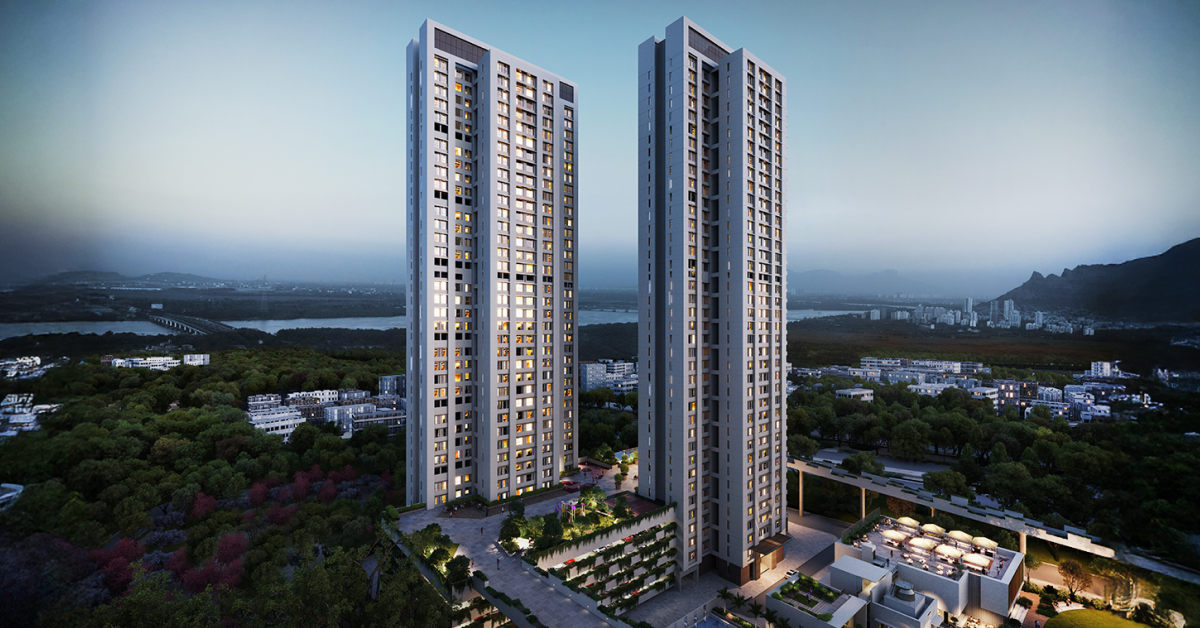
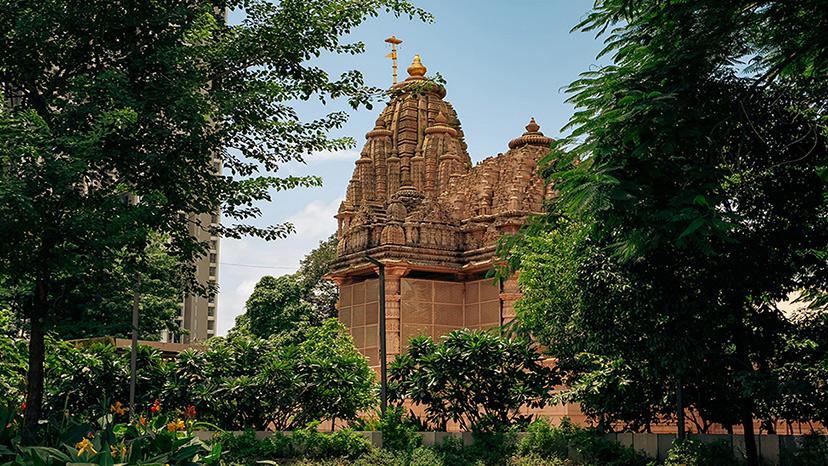
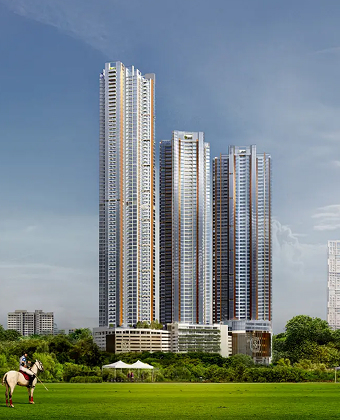
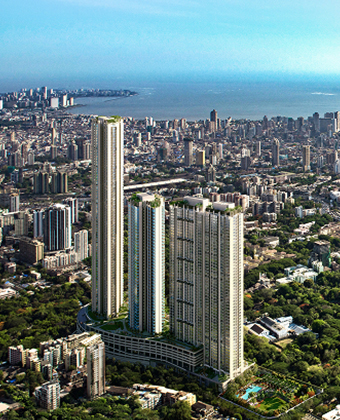
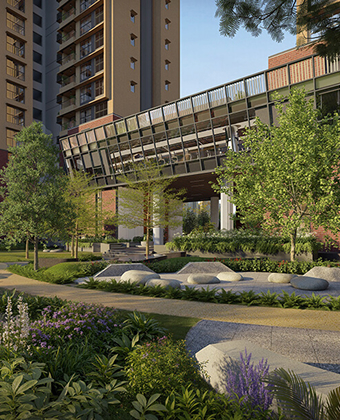
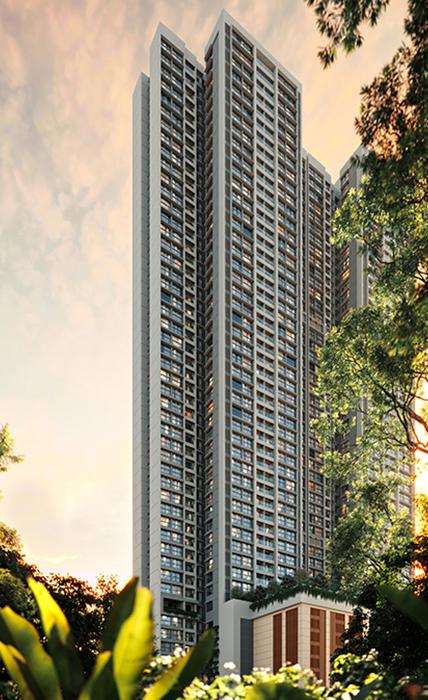
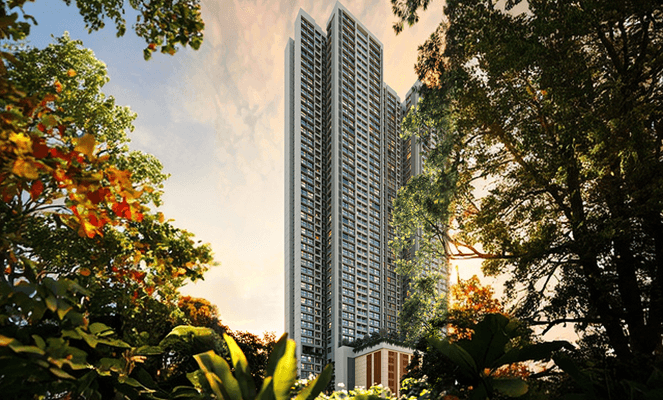
Piramal Vaikunth in Thane West is a 32-acre township situated on the western side of Thane. Piramal Vaikunth has a well-established community, featuring the first ISKCON temple in a gated township in Maharashtra. It also boasts a 47,000 sq ft clubhouse, all within a MahaRERA-registered project. As the water metro corridor develops along the eastern side of Thane Creek, properties in Thane West benefit from improvements in Thane's overall connectivity.
For buyers looking for homes near Thane Creek and the planned water metro terminals — especially in the Kolshet and Gaimukh areas — the future transit options, combined with current prices that have not yet adjusted, offer potential for early investment. The main risk, like with any infrastructure project, is uncertainty about timelines. India's history with infrastructure calls for caution regarding promised deadlines. Buyers should be ready to hold their investment beyond the December 2026 pilot date, as the Thane Creek routes will arrive later.
What India's First Water Metro in Kochi Tells Us About What to Expect in Mumbai
India's first water metro started commercial operations in Kochi in April 2023. By late 2025, it was running on 6 routes and had 10 operational terminals. It has served over 5.25 million passengers as of October 2025. The complete network, when finished, will span 15 routes, include 38 terminals, and cover 78 km — connecting 10 islands to the mainland. Full completion is expected by 2035. The system won the International Sustainable Transport Award (ISTA) in 2023 and received recognition from the World Bank for its urban mobility practices.
The key lessons for Mumbai are clear:
Frequency is more important than coverage
Kochi's early ridership was low when services ran infrequently. Once the frequency improved to 20–30 minute intervals on popular routes, daily commuter usage increased significantly. Mumbai's DPR acknowledges this by assigning fleet operations to private companies, thereby providing strong incentives to promote frequency.
Terminal quality shapes first impressions
Early terminals in Kochi were basic, but upgraded ones with shade, seating, digital displays, and connections to local transport vastly improved the commuter experience. Mumbai's DPR prioritises terminal infrastructure in the public-private partnership, including amenities that Kochi added later.
Land-side connectivity is a key issue
Kochi learned that ferry terminals without auto-rickshaws, feeder buses, or bike parking became tourist spots rather than functional transport hubs. Mumbai's system is designed to integrate multiple transport modes from the start, with terminal locations selected for their potential as transport hubs, not just waterfront access.
Property response near terminals happens gradually but is real
In Kochi, interest in residential areas near terminal locations increased significantly in the 12 to 18 months after the April 2023 launch. The impact was strongest in places where the water metro offered a much shorter route to the city centre than road options. Buyers near Thane Creek should expect a similar trend to emerge over a longer period, as Thane Creek routes are planned for later phases.
Mumbai's larger scale — roughly 10 times that of Kochi's population — along with much higher baseline demand and property values, suggests that the property reaction near Mumbai Water Metro terminals will likely be greater than in Kochi. For buyers near Thane Creek, the key question is not whether values will eventually reflect this connectivity, but how far ahead of the Thane Creek route launch they are buying in.
The route of the Mumbai Water Metro through Thane Creek is not just a vision. It is currently in the planning phase. The DPR was approved in March 2026, the PPP structure is in place, and limited pilot services are planned for December 2026 along the South Mumbai coastal corridors. Thane Creek's own routes — Kolshet – Kalher – Mumbra – Kalyan and Fountain Jetty – Gaimukh – Nagale — are expected to be introduced in later phases. This means buyers looking at property near the creek corridor are entering the market at the earliest confirmed stage of the infrastructure's lifecycle.
For those considering property in Thane, whether at Piramal Vaikunth or elsewhere in Thane West, the water metro's future expansion to Thane Creek is a long-term connectivity improvement that enhances the neighbourhood's overall potential. As with any infrastructure investment, it is important to set realistic expectations for the timeline.
Frequently Asked Questions About the Mumbai Water Metro
What is the Mumbai Water Metro, and which areas will it connect?➕
The Mumbai Water Metro is a planned electric ferry transport network based on the Kochi Water Metro — India's first water metro, which started commercial operations in April 2023. The DPR submitted by KMRL in February 2026 and approved in March 2026 suggests 10 routes and 29 terminals, according to Business Standard, citing KMRL. It will cover about 250 km of waterways across Mumbai, Thane, Navi Mumbai, Vasai, Panvel, and Karanja. The project is set up as a public-private partnership.
When will the Mumbai Water Metro launch, and what is the current status?➕
Ports Minister Nitesh Rane has stated that limited pilot services are planned for December 2026. As of mid-2026, KMRL has submitted the DPR, which was approved on March 17, 2026. The PPP structure is in place, and the Maharashtra government has begun issuing tenders. The December 2026 pilot will likely cover South Mumbai coastal routes, while the full network — which includes Thane Creek corridors — will take longer. Check the Maharashtra Maritime Board announcements for updated timelines.
Will the Mumbai Water Metro cover Thane Creek routes?➕
Yes. Thane Creek corridors are included in the broader DPR route proposal — specifically the Kolshet – Kalher – Mumbra – Kalyan route, and the Fountain Jetty – Gaimukh – Nagale route. However, these are planned for later phases of the rollout. The December 2026 pilot is expected to start with South Mumbai coastal routes (Nariman Point – Worli – Bandra – Versova), not the Thane Creek corridor.
How much have property prices appreciated near metro corridors in Mumbai historically?➕
Mumbai's metro expansions have caused property values to rise by about 15–25% near station locations, according to several infrastructure impact studies conducted from 2025 to 2026. A peer-reviewed study from 2025 (Suri & Cropper, 2024, Journal of Contemporary Urban Affairs) estimated a 7–8% increase in property prices within 1 km of Mumbai Metro stations. Price changes usually start once a project enters the confirmed execution stage — which is the current phase for the water metro.
Is it a good time to buy property near Thane Creek before the water metro launches?➕
The time between confirmed execution and actual launch is usually when infrastructure premiums are not fully priced in. Since the Thane Creek routes are set for later phases and not for the December 2026 pilot, buyers near the creek corridor are entering the market at the earliest confirmed stage. This pushes back the time before the full infrastructure premium is reflected. There are still timeline risks — Indian infrastructure projects often face delays, so buyers should expect a longer holding period.
Disclaimer — This blog is for informational purposes only and does not provide legal, financial, or investment advice. Water metro routes, timelines, terminal locations, and property market impacts described are based on publicly available reports and government statements as of mid-2026 and are subject to change. Confirm all project details with the Maharashtra Maritime Board, your developer, and qualified legal or financial advisors before making any investment decision.