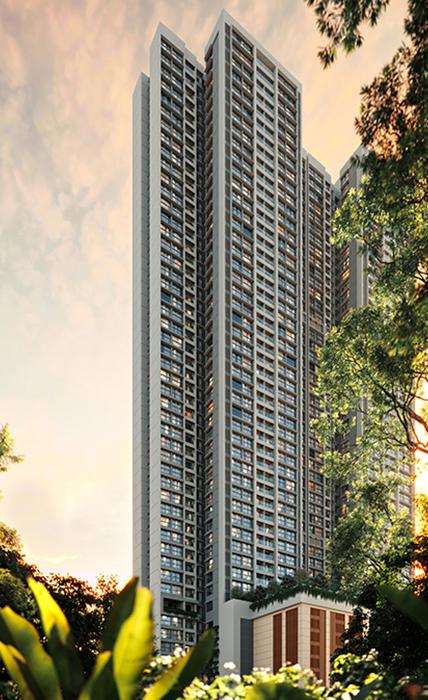
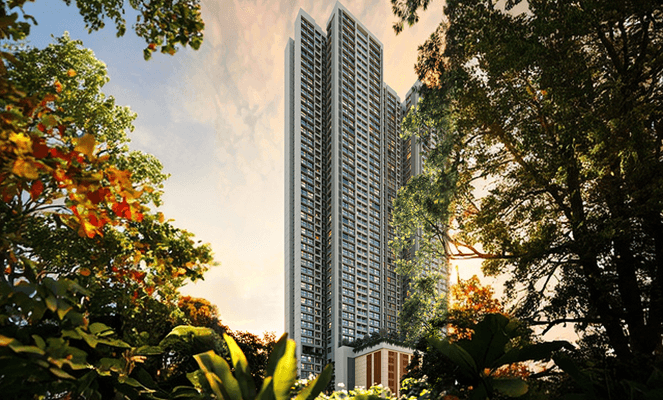
What is institutional funding and why does it matter when buying a luxury apartment?
When you buy a luxury apartment in Mumbai or Thane, you are not simply purchasing a home, you are effectively financing the developer. The funds paid at booking, during each construction stage, and throughout the payment plan essentially serve as a loan to the developer, which is repaid in the form of a completed flat. The developer ability to complete the project depends heavily on their financing structure. A developer backed by global institutional investors and a bank construction loan is held to a far higher standard of financial responsibility than one that relies mainly on buyer payments and informal loans.
This blog by Piramal Realty explains what institutional funding in real estate entails, why it matters when assessing luxury apartments in Mumbai or new projects in Thane, how to check if a developer has institutional backing, and the complete due diligence checklist to review before signing a booking form.
How Real Estate Developers Fund Construction in India
Real estate developers in India rely on various sources of construction capital, and the sources they choose often reflect their financial health and management quality.
Funding Type
Source
What It Signals to Buyers
Institutional PE / VC
Global or domestic private equity funds
Due diligence passed; governance standards met
Construction finance (bank)
Scheduled banks (HDFC, SBI, ICICI, etc.)
Bank-approved project; escrow mechanism in place
Construction finance (NBFC)
Non-banking financial companies
Moderate credibility; terms less standardised
Promoter / sales cash flow
Own equity plus buyer advances
Higher risk; no independent lender oversight
Informal / private lending
Private moneylenders, chit funds
High risk; no institutional accountability
For buyers, the financing structure of a developer carries significant implications. A developer backed by institutional private equity has already undergone rigorous scrutiny by professional investors who evaluate project viability, developer capability, and financial risk. Similarly, a developer with a scheduled bank loan has had their project evaluated by the bank risk team, which requires independent valuation, legal title checks, and careful financial analysis before funds are released. While neither of these guarantees project completion, they show a level of external oversight that self-funded or informally financed developers lack.
What Institutional Funding Means for Luxury Apartment Buyers
Institutional funding in real estate creates a natural alignment between investors and buyers. Both parties want the project completed on time and to the expected standard. An institutional fund that invests in a developer project risks losing money if the construction is delayed or poorly executed. This common goal is why institutional backing often correlates with higher project completion rates, though it does not provide an absolute guarantee.
There are three key ways institutional funding safeguards buyers of luxury apartments.
Governance Standards
Institutional investors demand financial reporting, audit compliance, and solid governance structures before investing. Developers with institutional funding typically set up systems that prevent fund misuse, a common cause of project delays in India real estate sector.
Construction Finance Escrow
When a project has a bank construction loan, the loan agreement usually requires buyer funds to be routed through an escrow account controlled by the bank. This escrow process is required under RERA to ensure that the buyer funds are not diverted to other projects.
Reputation Accountability
Institutional investors are accountable to their own investors, boards, and public image. A developer mismanaging a project backed by institutional funds faces consequences such as fund withdrawals, legal issues, and reputational harm, risks that do not concern self-funded developers. This difference in accountability can change developer behaviour.
Piramal Realty has secured about US$ 434 million from global private equity firms Goldman Sachs and Warburg Pincus. This is one of the largest investments in Indian residential real estate. This level of commitment shows that outside experts value the company projects, management, and ability to deliver across 13 million sq. ft. of development in and around Mumbai.
At the project level, institutional construction financing is listed in each project MahaRERA filing. Piramal Vaikunth is funded by ICICI Bank. Piramal Aranya is funded by HDFC Limited, with ICICI Bank as the mortgagee for some Wing A units. Piramal Mahalaxmi is funded by Yes Bank. Tata Capital Housing Finance and ICICI Bank, mentioned in Mahalaxmi marketing materials, serve as unit mortgagees for specific towers. This is a different role from the project main construction lender. These disclosures are publicly accessible and can be verified on MahaRERA.
How to Identify Institutionally Backed Developers and Top Builders
Not every developer that claims to be premium or luxury has institutional financial backing. Here are ways to verify this using public information.
Check the MahaRERA Project Page
Each registered project on MahaRERA lists the project financial lenders. If a scheduled bank like HDFC, SBI, ICICI, Axis, Kotak, or Tata Capital is named as the construction lender, the project has passed that bank credit and legal checks. If the lender is an unknown NBFC or no lender is listed, investigate further.
Review the Developer About Page and Press Releases
Institutional PE investments are usually made public as marketing proof points. Developers with institutional equity will almost always highlight this on their websites. If a developer claiming premium status fails to make such a disclosure, it is a potential red flag.
Examine the Parent Group
Leading builders in Mumbai and Thane are often backed by large conglomerates like Piramal, Godrej, Lodha, Oberoi, and Prestige whose parent companies have solid financial standing, are publicly listed, and have reputations that extend beyond individual projects. A developer lacking a traceable parent company, no public listings, and no institutional funding should be scrutinised closely.
Review Delivery History
Check the developer past projects against promised possession dates. MahaRERA project pages reveal the adjusted completion date whenever it changes, so multiple extensions should be noted. Developers with strong institutional backing usually have better project management and fewer delays, as lenders actively push for adherence to timelines.
Checklist for Buying a Luxury Apartment in Thane or Mumbai
Real estate due diligence for luxury apartments in Thane or Mumbai should be thorough. The following checklist includes both financial and legal checks every serious buyer should perform before signing anything.
What to Check
Where / How
MahaRERA registration
maharera.mahaonline.gov.in, search by project name. See also the Piramal Realty guide on how to check RERA details.
Quarterly progress reports
MahaRERA project page, Progress section
Lender or bank disclosed
MahaRERA project page, Financial section or disclaimer text
Developer delivery track record
Previous projects by the same developer, possession date vs promised date
Institutional equity investors
Developer website About section or press releases
RERA complaints filed
MahaRERA project page, Complaints tab
Construction finance bank NOC requirement
Sale agreement, check whether the buyer needs an NOC from the lender
Developer net worth and parent group
Annual report, parent company public filings (BSE/NSE if listed)
The best way to run this checklist for new projects in Thane or Mumbai is to start with MahaRERA. The data is free, public, and legally required to be updated. If a project is not on MahaRERA, has not filed recent progress reports, or lacks a disclosed lender, it raises immediate concerns. This checklist is not exhaustive but covers the most critical points of failure in residential real estate transactions in India.
How Do You Know if a Developer is Trustworthy Before Buying?
Developer trustworthiness is not just one piece of data, it is built on multiple reliable signals. The most important signal is institutional funding. If a developer has raised equity from private equity firms and secured construction loans from scheduled banks, professional teams have assessed their risk. These professional investors and lenders conduct rigorous risk assessments before committing funds. The second key signal is delivery history. A developer who has successfully completed multiple projects on or near the promised date demonstrates execution capability and reliability.
Two factors that do not, by themselves, prove a developer trustworthiness are the price of the apartment and the quality of the brochure. The Mumbai real estate market has witnessed many expensive, well-marketed projects fail due to weak developer finances. Buyers looking at properties in Thane and Mumbai should scrutinise a 3 crore flat with the same rigour as any 3 crore investment, and more consideration than most apply to their stock portfolios.
One useful check that many buyers miss is the number of RERA complaints filed against a developer. MahaRERA keeps a public complaints database. A developer with a high number of complaints relative to the number of units delivered, or complaints that have gone to adjudication, is a significant warning sign. A developer with no complaints across several completed projects is a strong positive indicator. Both can be verified in under five minutes on the MahaRERA website.
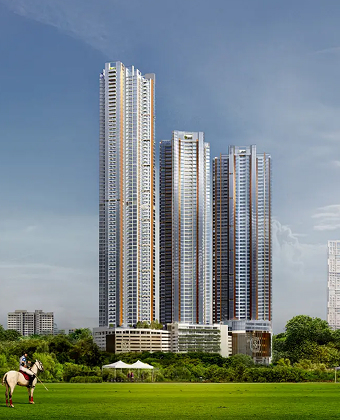
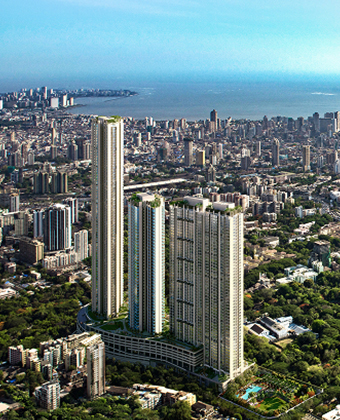
Institutional funding does not guarantee delivery, but it is the strongest verified signal of a developer financial responsibility. For buyers looking at luxury apartments in Thane at Piramal Vaikunth or luxury apartments in South Mumbai at Piramal Aranya or Piramal Mahalaxmi, the combination of group-level institutional equity, which totals US$ 434 million from Goldman Sachs and Warburg Pincus, project-level bank financing through Yes Bank for Mahalaxmi, HDFC Limited for Aranya, and ICICI Bank for Vaikunth, along with MahaRERA registration and compliance with quarterly progress filings, creates a due diligence profile that few new residential projects in Thane or Mumbai can match in all four areas.
Frequently Asked Questions
What is institutional funding in real estate?➕
Institutional funding in real estate refers to equity or debt capital provided by regulated financial institutions, such as private equity funds, banks, or insurance companies, to real estate developers. This is different from self-funding or informal credit. When a developer has institutional funding, it shows that professional investors or lenders have done their own checks and found the project and developer financially sound.
What happens to a buyer money if a real estate developer goes bankrupt?➕
Under RERA, buyer advances must be deposited into a designated escrow account. Seventy per cent of these collections are set aside for construction costs. This ensures that funds cannot be easily redirected to other projects. If a developer goes bankrupt, buyers are considered financial creditors under the Insolvency and Bankruptcy Code (IBC) and can claim the project assets. It is important to understand that a bank construction lien mainly protects the bank recovery. Buyer protection comes specifically from the RERA escrow requirement and the IBC financial creditor status, not from the lender lien. The IBC Amendment Act 2026, scheduled for April 2026, introduced changes focused on keeping troubled projects running rather than liquidating them. This approach is generally better for buyers. However, results in insolvency cases can still differ by project. Conducting financial due diligence before purchasing remains the best way to protect oneself.
Does MahaRERA registration guarantee project completion?➕
No. MahaRERA registration means the project is legally registered, its details are publicly available, and buyer advances must be held in an escrow account. It does not guarantee that the developer has enough financing for construction or that the project will be completed on time. MahaRERA does offer a complaint mechanism for buyers to seek compensation for delays, but preventing issues through careful pre-purchase research is far more effective than trying to fix problems after they happen.
How can I check if a real estate developer is financially safe before buying?➕
Verify whether the project is registered with MahaRERA and whether a scheduled bank is listed as the construction lender. Check whether the developer or parent group has announced institutional equity investors. Look at the developer history of project delivery, compare possession dates with promised dates on MahaRERA. Also, check for any complaints filed against the developer. These four checks, all based on public data, can provide a reasonable assessment of financial safety before making a purchase.
Are the top builders in Mumbai and Thane more likely to deliver on time?➕
Top builders in Mumbai with large portfolios, institutional funding, and proven track records usually have better on-time delivery rates than smaller or newer developers. This is partly because they have dedicated construction management teams, long-standing relationships with contractors, and active bank oversight that helps keep projects on schedule. Industry analyses, including data from Knight Frank and Anarock, often suggest a link between institutional size and reliable project delivery, though this is not certain. Even established developers can experience delays. This correlation offers a helpful starting point for due diligence, but it is not a guarantee.
Can a luxury apartment buyer file a RERA complaint against a developer?➕
Yes. Any buyer of a registered real estate project can file a complaint with MahaRERA against a developer for delays, deviations in specifications, false claims, or failure to provide possession. Complaints can be submitted online at maharera.mahaonline.gov.in. The adjudicating authority can award compensation, including interest on delayed payments. The process is user-friendly, and buyers do not need a lawyer, although legal representation is common for larger claims.
Disclaimer - This article is based on the information publicly available for general use as well as reference links mentioned herein. The views expressed above are for informational purposes only based on industry reports and related news stories. Piramal Realty does not guarantee the accuracy, completeness, or reliability of the information and shall not be held responsible for any action taken based on the published information. Piramal Realty expressly disclaims/disowns any liability, which may arise due to any decision taken by any person/s basis the article hereof. Readers should obtain separate advice with respect to any particular information provided here in.