Low-Density Living in Mumbai: What It Actually Means and How to Verify It Before You Buy
Most buyers evaluating luxury apartments in Mumbai focus on factors such as location, views, amenities & interior finishes. However, an equally important consideration is often overlooked: how many households share the same development. The factor, known as residential density, has direct impact on everyday living. It influences everything from elevator wait times, and lobby crowding to the availability of parking, access to amenities, natural light, privacy, and amount of open space available per resident. In Mumbai's premium market, where developers often label properties as ‘luxury’ regardless of density, it's important to verify these claims yourself.
In this blog Piramal Realty explains what low-density living means in Mumbai's premium market, why it matters when buying luxury apartments in South Mumbai or sea-facing properties, and how to confirm a project's actual density using MahaRERA data and direct questions to the developer.
What Low-Density Living Actually Means in Mumbai
Low-density living is not a regulated term in India, which means developers can use it freely in marketing materials. In practical real estate terms, however, a genuinely low-density project is typically assessed using three key metrics: units per acre (how many homes occupy a land area), open space ratio (the percentage of the site that is not built on), and floor space index (FSI) consumed (how much of the allowable FSI the developer has used).
The floor space index (FSI) is the ratio of total built area to plot area. It is regulated under DCPR 2034, which was implemented by MCGM in Mumbai.
A project approved at FSI 3.0 but built at FSI 2.2 offers significantly less built mass per square meter of land. This leads to less crowding, more light, and more open space for each household. In Mumbai's premium market, the best residential projects often feature developers who choose not to maximise FSI, opting for a less-dense product rather than maximising total sellable area.
Metric
High-Density Project
Low-Density Project
Units per acre
60–120+
Under 40
Open space ratio
20–30%
25–40%+ (in dense markets like South Mumbai; 40%+ in suburban plots)
Amenity area per flat
Under 50 sq. ft.
100 sq. ft. or more
No. of towers on plot
4+
1–3
Floor Space Index used
Near maximum permissible FSI
Well below permissible FSI
Lift-to-flat ratio
1 lift per 30–40 flats
1 lift per 15–25 flats
Note: Mumbai does not have a standardised ‘low-density’ certification. The figures above reflect market benchmarks used by premium developers and do not represent regulatory thresholds.
Why Low-Density Matters When Buying Luxury Apartments in South Mumbai
South Mumbai is the city's most land-constrained luxury real estate market, where neighborhoods such as Worli, Mahalaxmi and Byculla sit on some of the most expensive land in India, with intense pressure to maximise FSI on every plot. As a result, genuinely low-density residential developments rarer in this area than in the suburbs, and when they do exist, they often command a higher price.
The practical impacts of density for a buyer in South Mumbai are significant. A project with 200 units on a 1-acre plot means 200 families sharing the same lobby, elevator, parking ramp, and pool deck. In contrast, a project with 60 units on the same plot offers a different daily experience, shorter wait times, quieter common areas, more access to the pool, and a building that feels more private. For those looking at sea-facing apartments in Mumbai, density also affects view corridors. In dense projects, towers are usually placed closer together, which can block views from lower floors even if upper floors have a clear outlook.
As FSI has increased in South Mumbai, the responsibility for maintaining spaciousness has fallen entirely on individual developers' choices. A high price does not ensure low density; it requires clear verification.
How to Verify a Project's Density Before You Buy
The most reliable way to verify a project's density is by checking its MahaRERA registration. All MahaRERA-registered projects publicly disclose key parameters. By examining several of these, a buyer can independently calculate units per acre, regardless of what the developer's brochure claims.
What to Check
Where to Find It
Total number of units
MahaRERA project page → ‘Number of Apartments’
Plot/site area
MahaRERA project page → ‘Land Details’ section
Open space area
MahaRERA drawings → landscape plan; or ask the developer directly
FSI consumed vs permitted
Building plan approval (IOD/CC) via developer; MCGM records
Amenity area
Brochure or MahaRERA project annexure
Number of towers
MahaRERA project registration details
Step-by-step: go to maharera.mahaonline.gov.in, search for the project by name or registration number, and open the project details page. The ‘Number of Apartments’ field shows the total unit count. The ‘Land Details’ section displays the plot area in square meters. Divide the total units by the plot area in acres (1 acre = 4,047 sq. m.) to compute units per acre, independent of what the brochure claims. A project claiming to be low-density but showing over 80 units per acre and 25% open space is misrepresenting itself. The MahaRERA data provides the evidence. For a step-by-step guide on reading a project's full RERA filing, see Piramal Realty's detailed guide on how to check the RERA details of a project.
Finding the floor space index consumed is more challenging to obtain from MahaRERA alone. It requires the building plan approval (IOD or CC), which developers must share with buyers under RERA. Asking for the sanctioned FSI and consumed FSI is a reasonable due diligence question for any serious buyer of luxury apartments.
What to Look for in Sea-Facing Apartments in Mumbai Beyond the View
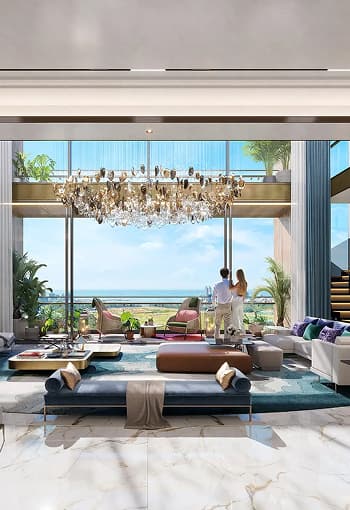
Sea-facing apartments in Mumbai are among the city’s most aspirational homes, but they are also often over-marketed. In many cases, upper floors in well-positioned towers can offer a view of the sea. What truly differentiates a premium sea-facing residence is the permanence and usability of that view, the distance from neighbouring buildings, the amount of privacy it provides, the natural ventilation it enables, and the extent to which the project’s design maximises the waterfront setting.
For sea-facing apartments, density matters in three ways beyond the obvious. First, closely spaced towers on a dense plot can channel wind at height. Balconies in high-floor units between adjacent towers might be unusable for much of the year. Second, view corridors can diminish as surrounding areas develop. A lower-floor sea view today could be blocked within a decade if adjacent plots are redeveloped. Third, a more densely built plot implies a greater maintenance burden for each household, even with the same quality of infrastructure. Over 20 years, the sinking fund in a low-density building is generally easier to manage.
Here’s a practical checklist for sea-facing apartments in Mumbai beyond the view:
Total units per acre — not just from the view floors
Number of units on each sea-facing floor — a tower with 4 units per floor offers a vastly different experience than one with 12 units per floor
Wind study or aerodynamic assessment — increasingly part of premium project approvals
Height of adjacent buildings on the plot boundary — affects the risk of view obstruction
Open-plan ratio and setback distances — indicate how much room the building has
Low-Density Residential Projects in South Mumbai by Piramal Realty
In a market where low density is mentioned but rarely explained, two projects by Piramal Realty have lower density profiles in their respective micro-markets. Buyers should verify the specific figures for their unit and phase using the MahaRERA-based verification discussed in this blog.
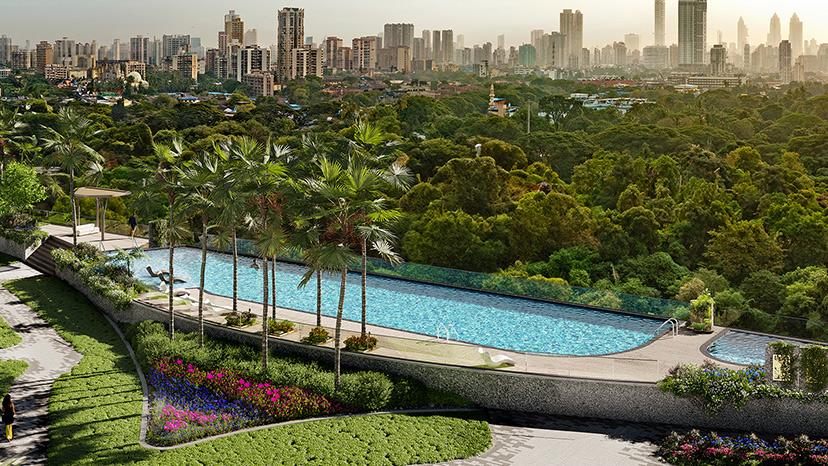
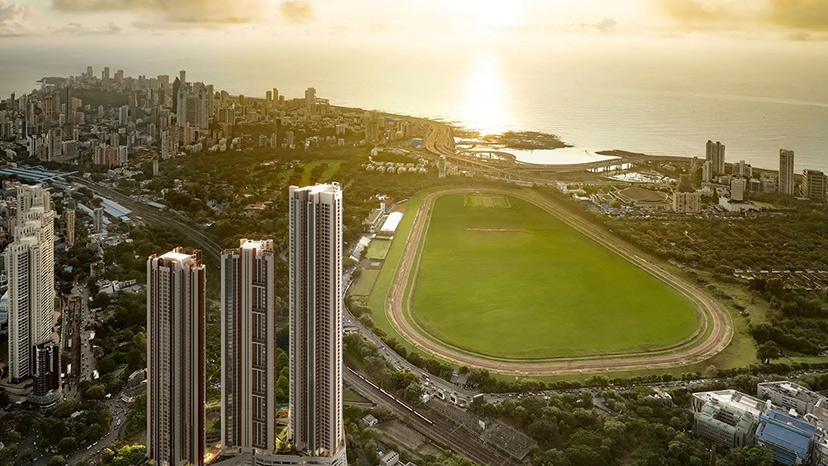
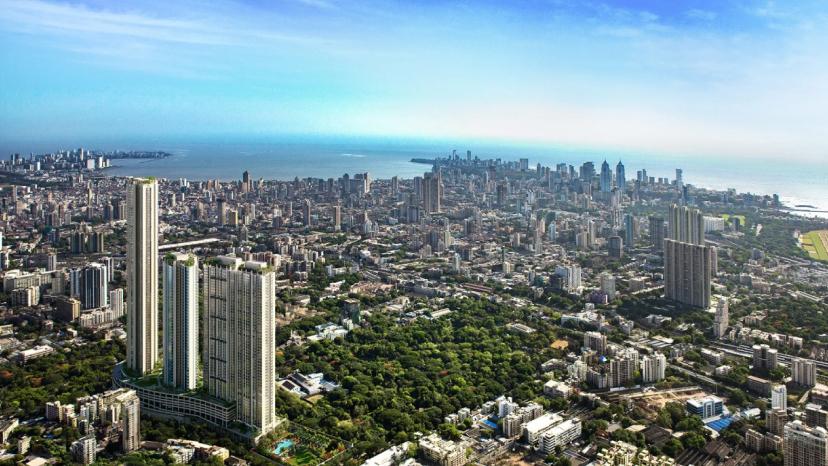
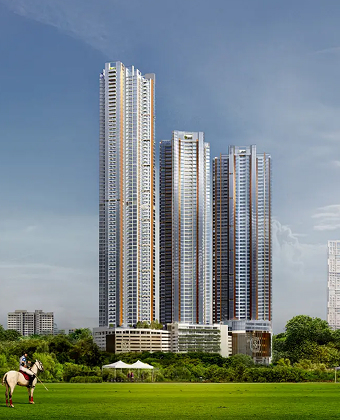
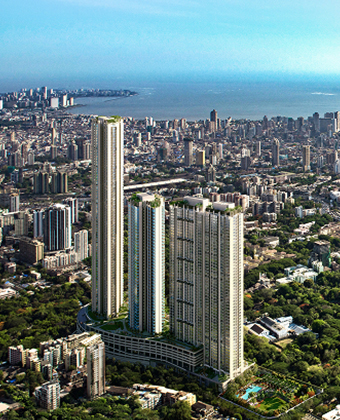
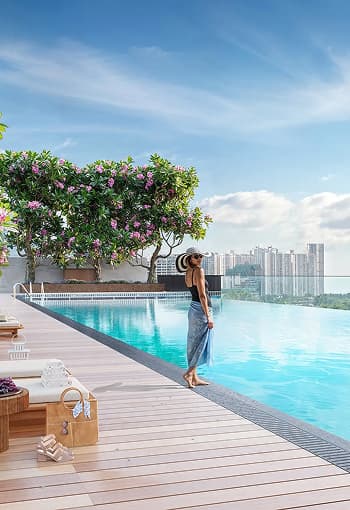
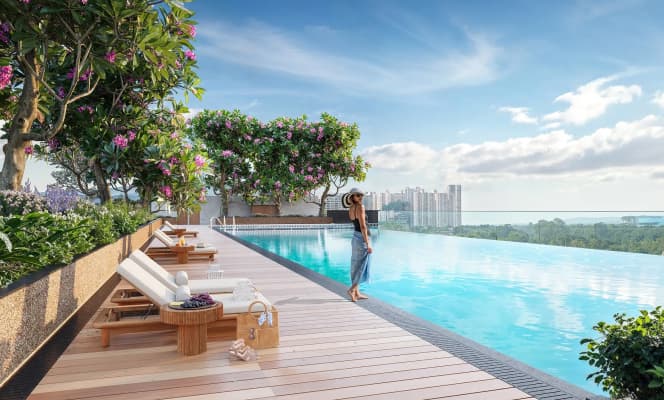
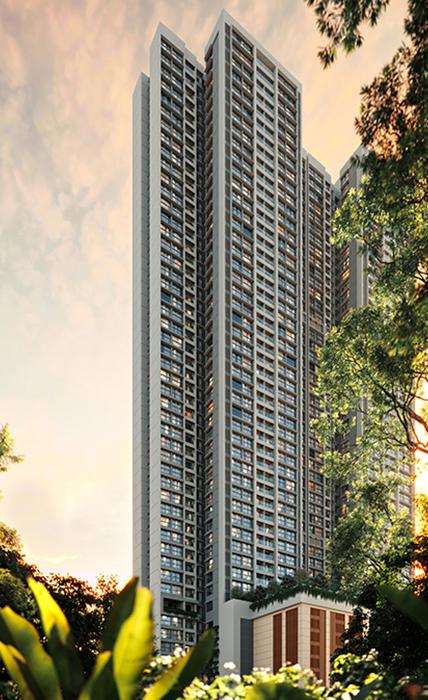
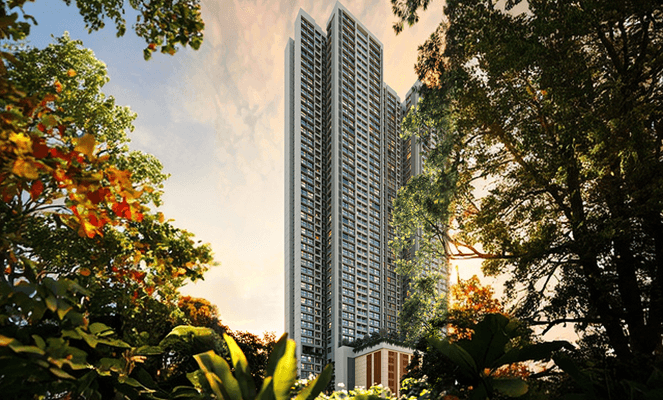
Piramal Mahalaxmi is located at Jacob's Circle in Mahalaxmi East. It includes Tower I (South), Tower II (Central), and Tower III (North), with each tower offering views of the Mahalaxmi Racecourse and the Arabian Sea. Designed by CallisonRTKL from Seattle, with interiors by Conran and Partners from London, and Hafeez Contractor as Project Architect, each tower features dedicated amenities, including an infinity pool, spa, rooftop deck, and clubhouse lounge. These amenities reflect a lower per-tower unit count than is typical in a maximised FSI development. The project offers luxury apartments in 2, 3, 4 and 4.5 BHK layouts. It is located 850 meters from Mahalaxmi Railway Station and 1.4 km from the Lalbaug Flyover. Buyers can check the units-per-acre figure for their specific tower by referring to the Piramal Mahalaxmi MahaRERA filing at maharera.mahaonline.gov.in.
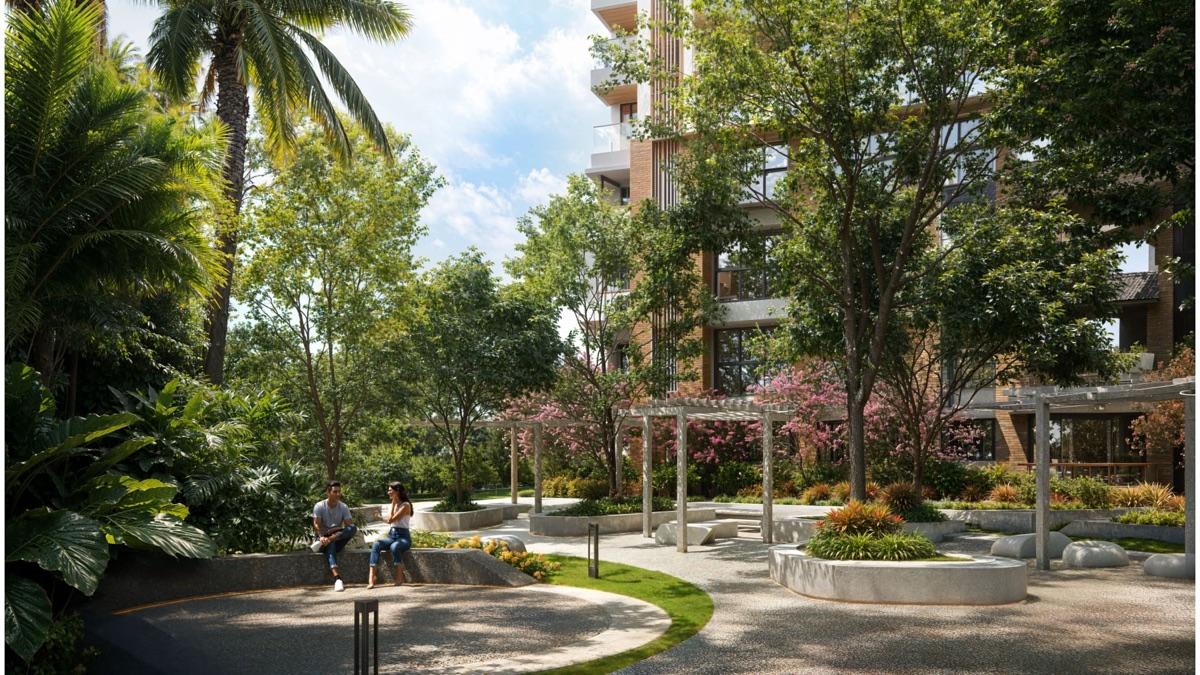
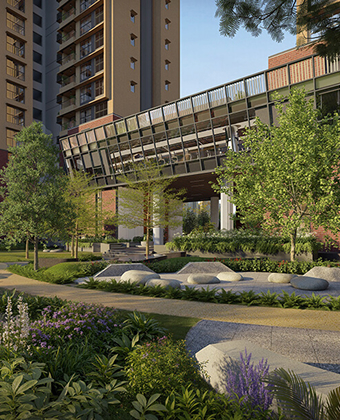
Piramal Aranya in Byculla East covers about 7 acres next to the 60-acre Rani Baug botanical gardens. It features three towers—Avyan, Arav, and Ahan—along with Ahan II, which provide 2, 3, 4, and 5 BHK apartments. These apartments offer views of the Rani Baug gardens to the west and the Eastern Harbour to the east. More than 40 amenities are spread over roughly 1 lakh sq. ft. (9,290 sq. mt.) of recreational space, including a 50-meter lap pool, a spa, and tower-specific amenity zones. The 7-acre footprint supports 3+1 towers in 2–5 BHK configurations, giving Piramal Aranya a lower density than typical South Mumbai developments, which usually occupy 1–2 acres. As with Mahalaxmi, the project's MahaRERA filing contains the unit count and plot area figures for independent verification. Both projects are registered with MahaRERA, and all disclosures are publicly accessible.
What to Ask a Developer to Confirm Low-Density Claims
Developers promoting low-density residential projects in Mumbai do not have to clarify what they mean by low-density. Here are specific questions to ask in writing before signing, so you can verify their claims:
What is the total number of units for all phases of this project, and what is the total site area? You can calculate units per acre from these figures.
What FSI has been approved, and what FSI has been used? If the used FSI is close to the approved maximum, the project may not be low-density; it might just be taller.
What percentage of the site area is designated as open space in the approved plan? Request the landscape plan from the MahaRERA documents.
How many units are on each residential floor in the tower I am considering? This information will help to understand corridor density and wait times.
Are the amenities shared across all phases of the broader project, or are they exclusive to this building? Shared amenities across a phased development could result in a higher density than the individual tower would imply.
Can you provide the approved building plan (IOD/CC) that shows the setback distances from all plot boundaries?
A developer who genuinely sells a low-density project will answer these questions willingly since the facts support their claims. Hesitation to answer specific questions about unit count, FSI, or open space should raise concerns.
Low density is frequently misused in Mumbai's premium residential market, and it’s crucial to verify these claims. The necessary resources are available. MahaRERA filings are public, FSI is a calculable figure, and determining units per acre is straightforward arithmetic. If you are looking into luxury apartments in South Mumbai or sea-facing options, use these checks before deciding which projects can truly deliver the low-density experience they advertise.
Frequently Asked Questions
What is the ideal number of units per acre for a low-density project in Mumbai?➕
In Mumbai's premium market, fewer than 40 units per acre are usually considered low density. Projects with 15–30 units per acre are rare and typically belong to the highest pricing tier. Standard mid-range developments in the suburbs feature 60–100+ units per acre. Due to land constraints in South Mumbai, even ‘premium’ projects often exceed 60 units per acre, underscoring the need to verify this figure against MahaRERA data.
How is Floor Space Index (FSI) related to project density?➕
The floor space index (FSI), governed by DCPR 2034 in Mumbai, sets the maximum ratio of built area to plot area that a developer can construct. Higher FSI usage leads to more total built area on the same plot. This often results in more units, more towers, and increased density. A developer building at 70% of the allowable FSI is making a specific choice about density. While FSI alone does not determine density, it is a reliable indicator found in public records.
Are low-density apartments in South Mumbai a good investment?➕
Historically, yes. Low-density properties in South Mumbai have risen steadily in value and maintained their worth better through market cycles than high-density counterparts in the same micro-market. The scarcity factor is real; truly low-density sites in South Mumbai are finite, and supply doesn't increase with demand. The rental market for low-density, luxury units is also stronger, attracting senior executives and families seeking spacious, peaceful surroundings.
How do I check MahaRERA filings for a residential project in Mumbai?➕
Visit maharera.mahaonline.gov.in and use the project search option. Enter the project name or MahaRERA registration number. The project page will display the total number of apartments, the land area, the project type, and details about the registered promoters. Under ‘Documents’, you can find approved plans, carpet area schedules, and quarterly reports. All registered projects must keep their filings current; outdated information itself is a compliance issue worth discussing with the developer. For a detailed walkthrough, see Piramal Realty's guide to checking a project's RERA details.
Do all luxury apartments in Mumbai qualify as low-density projects?➕
No. Luxury apartments in Mumbai are priced based on specifications, location, and brand, rather than density. Many high-end towers in Lower Parel, Worli, and Bandra feature 80–120 units per acre, despite prices ranging from ₹3–5 crore. Luxury branding and low-density living are independent factors. The only way to confirm low density is by calculating units per acre using MahaRERA data; the price alone does not indicate density.
Disclaimer - This article is based on the information publicly available for general use as well as reference links mentioned herein. The views expressed above are for informational purposes only based on industry reports and related news stories. Piramal Realty does not guarantee the accuracy, completeness, or reliability of the information and shall not be held responsible for any action taken based on the published information. Piramal Realty expressly disclaims/disowns any liability, which may arise due to any decision taken by any person/s basis the article hereof. Readers should obtain separate advice with respect to any particular information provided here in.